
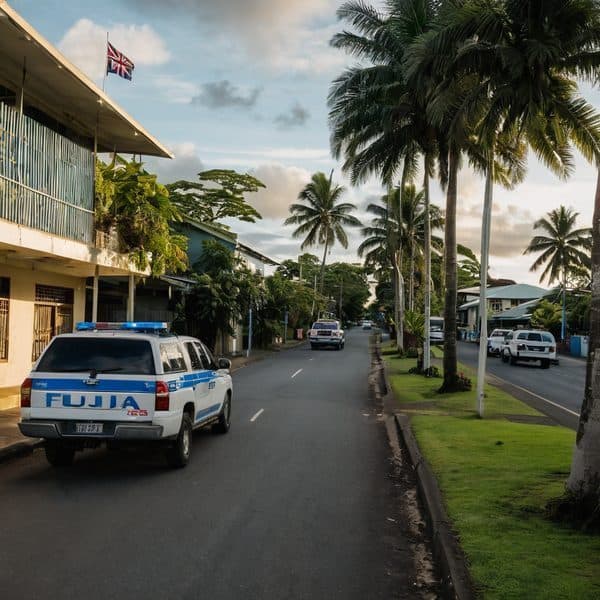
Prime Minister Sitiveni Rabuka has moved to temper public concern about a perceived change in behaviour in Suva, saying there is no official report linking that shift to a heightened military presence and that he hopes any caution shown by residents stems from increased awareness of crime and drug activity rather than fear of soldiers on the streets.
Speaking to The Fiji Times, Rabuka acknowledged informal observations that the capital “has seemed less active” in recent days but stressed those impressions have not been formally reported. “That has not been reported,” he told the newspaper, adding he preferred to believe the change reflects the “elevation of the profile of crimes and drugs” that has made people more cautious. “I’m hoping that it is not the fact that the military has come to help the police,” he said.
Rabuka’s comments are the latest development in a broader conversation about the role of the Republic of Fiji Military Forces (RFMF) in supporting law enforcement. In December he urged the military to act in support of, rather than lead, counter-drugs operations, responding to remarks by Brigadier General Manoa Gadai — commander of the Joint Task Force Command at Blackrock Camp — that the RFMF could take a leading role. At that time Rabuka emphasised the need to verify public statements and reaffirmed trust in Police Minister Ioane Naivalurua, Defence Minister Pio Tikoduadua and the leadership of both services.
The prime minister also suggested the recent atmosphere of heightened vigilance might be spreading beyond those involved in unlawful activity. “But I think we’re all more cautious, not just those who are inclined towards breaking the law,” he said, noting that increased public awareness and caution could ultimately contribute to a reduction in incidents — a development he described as potentially positive if it reflects public vigilance rather than intimidation.
Rabuka’s clarification comes amid public debate over the implications of deploying military personnel to assist police in drug and crime operations — an issue sensitive in Fiji given the nation’s history of military involvement in politics. Supporters of the joint approach say it can bolster law enforcement capacity during serious operations; critics worry such deployments risk blurring lines between policing and the armed forces and could intimidate ordinary citizens.
Authorities have not released formal figures or reports confirming a drop in crime or detailed accounts of changes in public activity in Suva, and Rabuka reiterated there is no official data to substantiate the anecdotal observations. For now, the government appears focused on ensuring cooperation between police and the RFMF remains clearly defined as supportive, and on encouraging public vigilance against drug-related crime.
The prime minister’s statement is likely to be watched closely by community leaders, human rights advocates and security officials who have called for transparent oversight of any military role in domestic operations. With no formal report yet produced, Rabuka’s appeal — that a quieter capital would be the result of awareness and not fear — sets the tone for further public discussion and for how authorities will communicate the results of ongoing security efforts.