
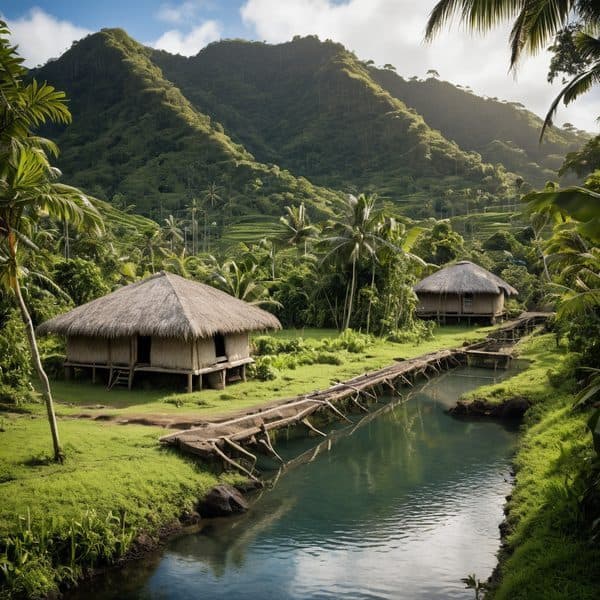
A newly commissioned ecological water purification system has been installed in Nukudamu village, Udu, in Macuata, the Government announced, marking the latest step in efforts to improve drinking water access for remote communities. Rural and Maritime Development Minister Mosese Bulitavu said the system will provide reliable safe drinking water for households that have traditionally relied on rainwater harvesting and other untreated natural sources.
“This will provide clean and safe drinking water for the community,” Mr Bulitavu said, adding that at least 30 households in Nukudamu would directly benefit from the installation. He described the project as part of the Government’s priority to deliver basic services to rural and maritime areas, particularly communities facing long‑standing infrastructure challenges.
Officials described the technology as an ecological purification system, a term commonly used for low‑energy, nature‑based treatment approaches that can include sand filtration or constructed wetland elements. Such systems are often favoured in small settlements because they are simpler to operate and maintain than large centralized treatment plants, and can be adapted to local water sources. The Ministry said the aim is to reduce dependence on untreated rainwater and natural runoff while boosting local water security.
The Nukudamu commissioning is the latest localised initiative in a broader national push to shore up water supplies. In recent months the Government and technical agencies have rolled out a series of measures — from groundwater surveys in Vanua Levu to upgrades of urban treatment capacity — intended to expand reliable access to potable water across Fiji. The Ministry’s announcement said similar ecological systems would be rolled out to other rural and maritime communities as government development priorities dictate, though it did not provide a timetable or funding breakdown for future sites.
Community leaders and residents typically welcome projects that promise steady household supplies, particularly in remote villages where seasonal variability in rainfall and limited infrastructure can leave families vulnerable. The Government has in parallel invested in mapping groundwater resources and upgrading treatment plants on larger scales, signalling a two‑track approach of localised treatment systems combined with wider infrastructure projects to address both immediate and long‑term needs.
Mr Bulitavu framed the Nukudamu installation as part of a sustained effort to close service gaps in rural Fiji. As these smaller ecological systems are deployed across other islands and coastal settlements, officials said attention will need to be given to ongoing operation and maintenance to ensure the installations continue to deliver safe water over the long term.