
Prime Minister Sitiveni Rabuka says Fiji has adequate fuel stocks for now but warned households and businesses to brace for higher prices, as his government moves to cushion the blow with a $56 million relief package redeployed from the existing 2025–2026 Budget.
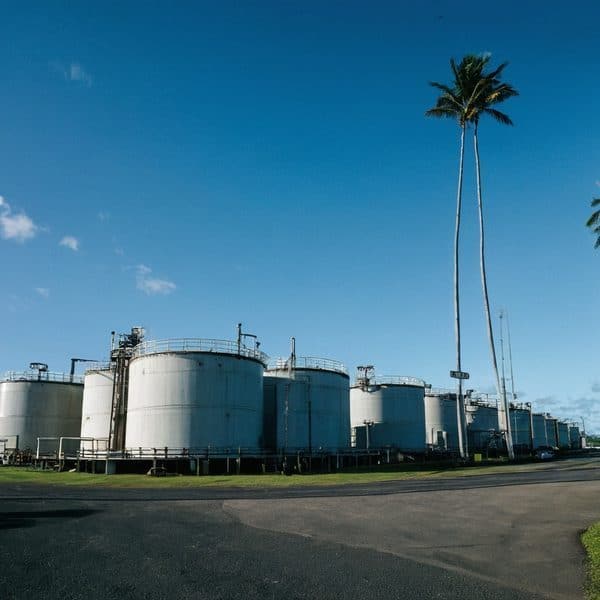
In a statement outlining the nation’s fuel position, Rabuka said that as of April 19 Fiji had about 45 million litres of fuel on land, with a further 22 million litres expected to arrive before the end of April. That puts total available supply for the month at roughly 67 million litres — close to half of the country’s national storage capacity. With daily consumption running at around 2.5 million litres, officials expect stocks to fall to about 40 million litres (roughly 29 percent of capacity) by the end of April as part of a routine drawdown to make way for incoming shipments.
Rabuka said the picture improves in May, when suppliers have committed to delivering about 118 million litres. Those shipments are expected to lift national fuel stocks to more than 59 percent of storage capacity, returning Fiji to a stronger buffer. He described the current situation as Phase 1 — “a normal supply situation” — but one under pressure from rising global fuel prices.
The prime minister stressed that the problem is not a domestic supply shortage but a global price crisis tied to the war in the Middle East, disruptions to shipping through the Strait of Hormuz and higher purchase costs denominated in US dollars. “This is not a fuel shortage crisis. This is a global price crisis,” Rabuka said, noting that retail fuel prices were increased on April 1 by the independent regulator, the Fijian Competition and Consumer Commission (FCCC), and that another rise is likely in May as international costs are passed through to the local market.
On April 21 Cabinet approved the redeployment of $56 million (US$39.95 million) within the current budget to help protect livelihoods, maintain essential services and support vulnerable families and businesses affected by rising fuel costs. Rabuka emphasised the money will come from reprioritised, delayed projects in the 2025–2026 Budget and is not new borrowing.
The announcement updates earlier government and regulator statements this year that flagged risks to Pacific fuel prices from heightened tensions around the Strait of Hormuz. Unlike warnings issued in March, which raised concerns about potential supply disruption, the latest figures show Fiji’s immediate supply lines intact, with planned May deliveries expected to restore a more comfortable stock position. What remains unresolved are the pass-through effects of sustained higher international prices on household budgets and transport operators, which the government’s short-term fiscal measures aim to ameliorate while longer-term impacts on inflation are monitored.