
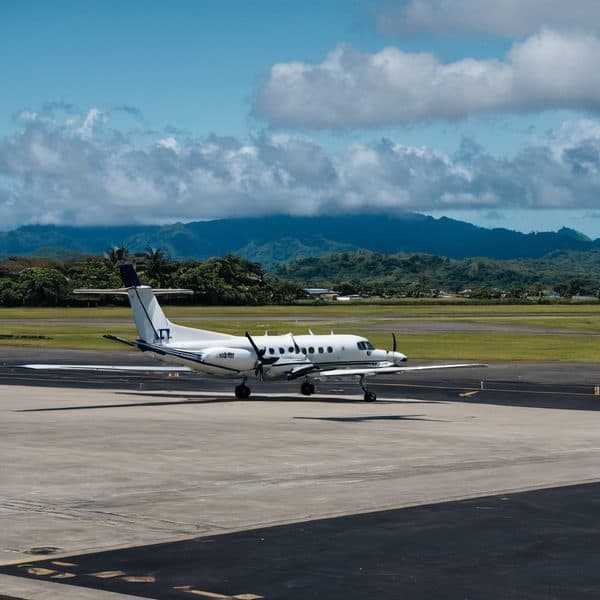
New Caledonia’s Congress on Thursday unanimously approved a two-year extension of the territory’s loan guarantee for Air Calédonie, a procedural move designed to mirror a maturity extension granted by the airline’s banks. The measure, which does not carry an immediate cost to the territory, covers two 2016 loans totalling 2.72 billion francs and is part of an already-underway restructuring that has included job cuts and the sale of an aircraft. But the extension does little to resolve the crisis that pushed the carrier into receivership ten days ago.
The guarantee extension was presented as a technical step to preserve Air Calédonie’s access to credit while the company and its judicial administrators seek a longer-term solution. Elected officials warned that the carrier’s survival depends on flights resuming, however, as an ongoing blockade of airstrips across the Loyalty Islands by groups opposed to transferring domestic services to La Tontouta airport continues to ground operations. “The unblocking of the airfields is necessary and fundamental,” Milakulo Tukumuli said, revealing that the judicial administrator had been on the brink of moving to liquidate the company just a day earlier.
The blockade has sharpened concern that receivership could swiftly turn into liquidation if services do not restart. Omayra Naisseline said the guarantee decision “is not progressing toward a way out of the crisis” and urged a temporary return of operations to Magenta airport in Nouméa to restore connectivity. Government President Alcide Ponga rejected that proposal as “too complex and costly,” arguing operational shifts would be difficult to implement on short notice.
Healthcare access has emerged as an immediate casualty of the aviation stoppage. Reine Hue warned that medical evacuations are being disrupted and patients are missing specialist appointments as the province struggles to organise transfers under the current health corridor arrangement. President Ponga responded that provinces must shoulder their responsibilities for patient evacuations, signalling a political dispute over who will finance and manage emergency transfers while the airline’s future is in limbo.
Air Calédonie’s lenders agreed to extend maturities by two years as part of negotiations over the airline’s debt, and Congress’s matching guarantee was intended to prevent banks from being forced to call loans while receivership proceedings continue. But the guarantee alone does not resolve the operational impasse created by the Loyalty Islands’ blockades, and officials say restoring runway access is the decisive next step to avert insolvency.
For now, administrators and local leaders face a narrow window to negotiate a pathway that both secures creditors’ positions and persuades local groups to lift obstructions. Without a political and logistical breakthrough to restart regular flights, the combination of stopped operations, shrinking cash flow and heavy debt obligations leaves liquidation a distinct and imminent possibility.