
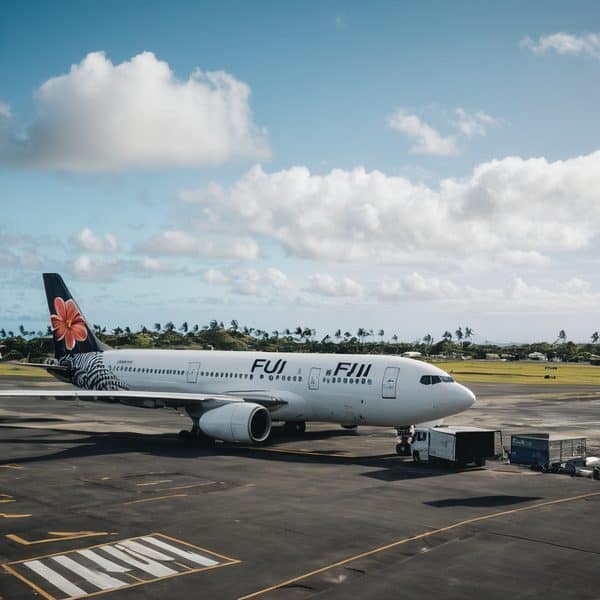
Fiji Airways will suspend its direct Nadi–Dallas Fort Worth service from September 7 as it reshapes its network in response to surging jet fuel costs and changing passenger demand, the airline announced on Thursday.
The carrier said the decision, effective 7 September, is aimed at concentrating capacity on routes with stronger and more sustainable demand while protecting overall global connectivity. Managing Director and Chief Executive Paul Scurrah said the move gives the airline “the flexibility to focus on markets where we are seeing the strongest and most sustainable demand” as airlines worldwide contend with sharply higher operating costs. Fiji Airways noted jet fuel prices have more than doubled since the start of the year.
Passengers booked on the suspended Nadi–Dallas service will be contacted directly and re-accommodated via alternative routings. Options include same‑day connections through Los Angeles and services via San Francisco and Vancouver; customers can choose rebooking, travel credits or refunds, the airline said. Fiji Airways also emphasised it will maintain onward connectivity to Dallas Fort Worth through its partnership with American Airlines as part of the revised schedule.
While the direct Dallas leg is being paused, Fiji Airways said it will continue to operate up to 11 weekly flights to the United States via Los Angeles and San Francisco. At the same time the carrier is reallocating capacity in other parts of its network: Vancouver services will be upgraded to larger A350 aircraft from 8 September, and flights to Hong Kong will increase to up to four times weekly from 22 September.
The announcement is the latest development in a year of operational adjustments for the airline as it balances post‑pandemic recovery in travel demand with rising input costs. Earlier this year Fiji Airways cancelled a small number of Nadi–Dallas flights in January due to a severe U.S. winter storm and temporarily imposed limits on some Pacific routes when local fuel supply issues emerged. The new suspension is framed as a strategic reallocation rather than a permanent withdrawal, with the carrier stressing continued cooperation with industry partners and the Fijian government to preserve long‑term connectivity.
Scurrah pointed to resilient demand in nearby markets, noting strong visitor numbers to Fiji despite the cost pressures. “Given Fiji has just hit an all‑time visitor record for March, we know Fiji remains an attractive and accessible destination,” he said, adding that the airline’s priority is to “maintain reliable services, manage costs responsibly, and ensure confidence in travel to Fiji remains strong.”
For affected travellers, the airline says contact teams are already reaching out to offer alternatives and support. The suspension underlines how volatile fuel markets and shifting travel patterns are forcing carriers to tweak long‑haul routings and aircraft deployment even as tourism recovers.