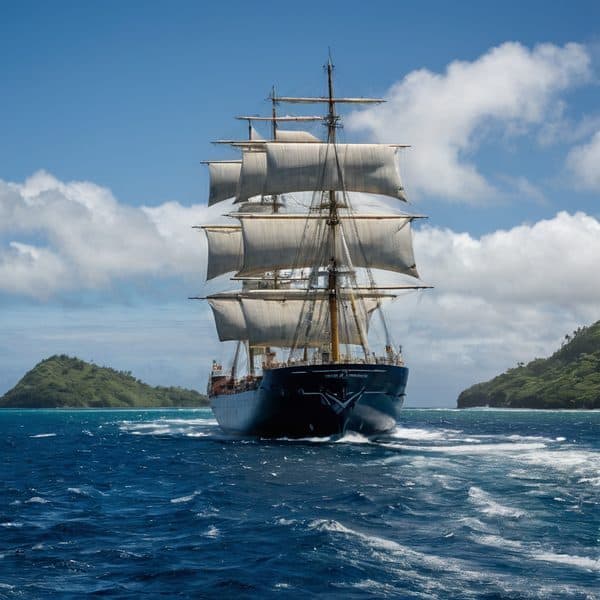
Pacific Island shipping — the lifeline for remote communities — is under fresh scrutiny as regional experts push a rapid shift to wind-assisted propulsion, arguing the move could blunt the impact of rising fuel costs and ageing fleets that leave islanders vulnerable to supply shortages.
“Shipping is for us as railways, canals and freeways are for developed countries. It is our absolute lifeline,” said Natasha Chan, assistant legal researcher at the Micronesian Centre for Sustainable Transport, during a regional discussion on low‑carbon maritime transport on April 10. Chan warned Pacific domestic shipping remains heavily dependent on imported fossil fuels and end‑of‑life or donated vessels, a reliance that magnifies costs and fragility across routes stretching hundreds of miles between tiny, low‑income communities.
Researchers and speakers at the forum argued that practical, near‑term technologies exist that could substantially cut fuel use in the Pacific context. Chan pointed to work suggesting fuel savings of at least 40 percent are achievable today if mature technologies are applied correctly and financing is targeted appropriately. Wind‑assisted propulsion — using modern sails, rotor sails or similar devices to supplement engines — was highlighted as one of the most feasible options. Tests during the 1980s fuel crisis delivered roughly 30 percent savings, advocates say, and modern materials and designs should improve those gains on Pacific routes.
Yet speakers cautioned that global advances such as hydrogen or other clean‑fuel ships, announced by larger maritime nations, are not always suitable for small, dispersed Pacific fleets. The crux of the problem, Chan said, is scale: investment and research and development tailored to the smaller vessel types and operating realities of island nations are thin or absent. Compounding the gap are weak maintenance systems, low insurance capacity and insufficient targeted climate and development financing that would support retrofitting and fleet renewal.
The call for a wind‑focused transition lands against a backdrop of recent regional maritime policy moves. Last year the International Maritime Organization established a regional presence office in Suva to bolster maritime safety and decarbonisation support, and Fiji has signalled tougher measures on derelict vessels and shipwreck insurance requirements — steps that, advocates say, could be aligned with incentives to encourage low‑carbon retrofits and safer, insured vessels entering Pacific waters.
The urgency of maritime reform is mirrored by broader regional pressures reported in the same April 10 bulletin. Timor‑Leste President José Ramos‑Horta warned of vulnerability to infiltration by foreign organised crime; Gizo hospital in the Solomon Islands declared a state of emergency; Fiji’s Chief Justice criticised retirement rules as discriminatory; and the University of the South Pacific has doubled student support amid a global crisis. Locally, business figure Anthony cautioned that any rise in fuel prices would have a “drastic” effect on Fijian workers, underscoring the social consequences of shipping fragility.
Advocates say the latest push for wind‑assisted systems is significant because it reframes decarbonisation as not only an emissions issue but a resilience and cost‑saving priority for Pacific livelihoods. Delivering on that promise, they argue, will require coordinated regional finance instruments, targeted R&D for Pacific vessel types, and policy levers to protect communities from the twin threats of rising fuel bills and a deteriorating domestic fleet.
Leave a comment