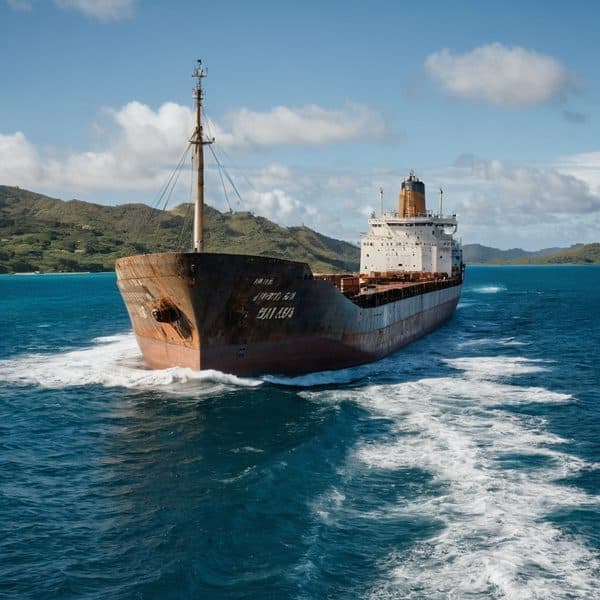
PACIFIC SHIPPING LIFELINE FACES CRISIS; EXPERTS URGE WIND-POWERED TRANSITION
Pacific Island shipping services are at a tipping point, experts warned this week, as ageing fleets, soaring fuel costs and limited connectivity threaten to cut off remote communities. Natasha Chan, assistant legal researcher at the Micronesian Centre for Sustainable Transport, told a regional forum that shipping in the Pacific functions “as railways, canals and freeways are for developed countries” and that the region is “absolutely” reliant on reliable domestic maritime services.
Chan laid out what she called a vicious cycle: limited investment and insurance capacity leaves operators dependent on old, donated or end-of-life vessels, while weak maintenance systems and under-resourced crews perpetuate substandard services outside the most profitable routes. The result, she said, is the region bearing some of the highest maritime connectivity costs in the world across millions of square miles where routes can stretch hundreds of miles between low-income communities.
But the discussion also offered a practical pathway: near-term investment in wind-assisted propulsion and other mature low-carbon technologies. Chan pointed to research showing “fuel savings of at least 40 percent are available to us today with existing, mature technologies” if they are properly adapted to Pacific conditions. She recalled tests from the 1980s during a fuel crisis that achieved about 30 percent fuel savings with wind-assisted systems and argued modern materials and designs could improve outcomes.
While global innovation in zero-carbon shipping is accelerating — with countries such as China, France and Norway advancing hydrogen-powered vessels and clean fuel programs — Chan cautioned that international solutions are not always transferrable. “What is not happening is the investment in research and development at our scale of vessels,” she said, warning it is not simply a matter of scaling down large-market technologies for Pacific needs. The message: targeted R&D, tailored designs, and appropriate development and climate finance are needed to make decarbonisation practical for domestic and inter-island shipping.
The call for action comes amid an uptick in regional maritime policy work. Since last year the International Maritime Organization established a Regional Presence Office in Suva to support Pacific nations on safety, pollution control and decarbonisation, and Fiji has moved to tighten rules around derelict vessels and shipwreck insurance. Advocates say those governance changes must be paired with financing that supports fleet renewal and adoption of wind-assisted and hybrid technologies to avoid service collapse.
The shipping warning also intersects with other fresh regional developments that underline the stakes. Timor-Leste President José Ramos-Horta warned this week of the country’s vulnerability to “infiltration by foreign organised crime,” a security risk that can affect maritime routes and logistics. In the Solomon Islands, Gizo Hospital has declared a state of emergency, highlighting how communities depend on timely sea-borne supplies and medical evacuations. At the same time, the Weather Ready Pacific initiative is strengthening early warning systems — a resilience measure experts say is critical for safeguarding shipping operations in an era of more frequent extreme weather.
Fiji’s Climate Change Minister outlined priority actions this week to accelerate Pacific climate responses, signalling political appetite for stronger regional cooperation on transport decarbonisation. Other Pacific developments — from the University of the South Pacific doubling student support amid global crises to PNG Health Minister Kapavore praising a visiting Chinese medical ship — underscore how maritime services remain central to health, education and economic life.
Experts say the latest development is clear: technical solutions for cutting fuel use exist, but without targeted R&D, bespoke vessel designs, and tailored financing mechanisms to support small-ship markets, the Pacific risks deeper isolation, higher costs and greater vulnerability to climate and security shocks.
Leave a comment