
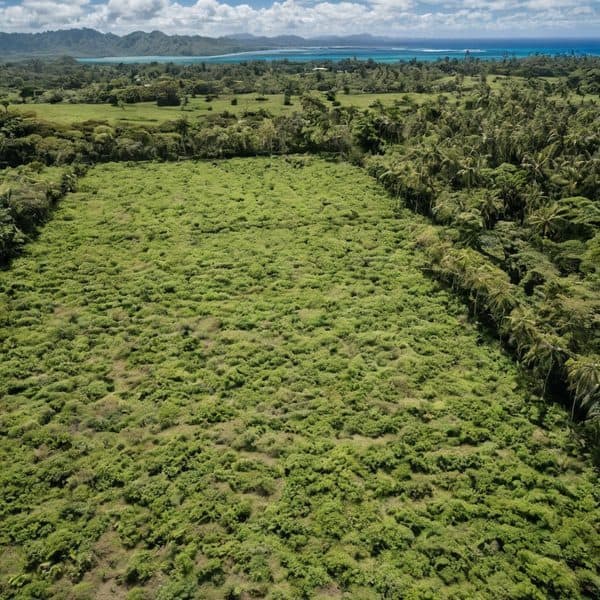
The long‑running Waila City proposal has been revived, with the Housing Authority of Fiji moving to finalise a masterplan and scheme for an initial 200 acres of the 864‑acre Waila land parcel in Nausori. The revival, announced by Housing Authority chief executive Isikeli Navuda, marks a renewed push to deliver a large mixed‑use township intended to ease housing pressure along the fast‑growing Suva‑Nausori corridor.
First unveiled in 2011 as a roughly $1 billion self‑contained city, Waila City was shelved last year amid delays and controversy. Navuda described the restart as a milestone in the authority’s long‑term housing strategy, framing Waila as an opportunity to build “sustainable communities for future generations” rather than just sell lots. The authority said plans envisage an integrated development with schools, shopping centres, medical services, community halls and dedicated green and recreational spaces.
The Housing Authority said the broader Waila parcel will be transformed into a mixed‑use development blending residential, commercial, civic and industrial lots alongside modern strata housing. The immediate focus is the 200‑acre masterplan and scheme rollout, which the authority intends to stage so infrastructure — roads, water, sewerage and electricity — can be laid in step with residential growth. The layout is described as intended to support existing infrastructure such as schools, water‑treatment and sewerage facilities, drainage corridors and open space reserves.
To inform detailed design and construction sequencing, the authority has engaged Wood & Jepsen Consultants to complete feasibility studies and technical reports. Those assessments will cover topography, flooding and drainage, geotechnical conditions, road networks and the capacity and routing of key services including water, sewerage and electricity, as well as how the new township will tie into external access and utility networks.
The Waila scheme being progressed includes a Residential B tranche expected to yield 266 lots, while Residential Lots C and D are projected to generate 904 lots. Those initial subdivisions sit alongside earlier work at Waila — with the authority having completed Waila 3A in 1994 and Waila 3B in 2006 — as part of a much larger build‑out envisaged across the full 864 acres. In total, the authority says Waila could eventually deliver around 5,000 residential lots and 3,000 housing units, figures it estimates could potentially accommodate between 40,000 and 50,000 families once fully developed.
Navuda said the scale of Waila positions it as “a gamechanger” for urban housing in Fiji, helping to ease shortages, reduce pressure on informal settlements and offer secure home‑ownership opportunities while contributing to national economic growth. He emphasised the staged approach and the need for robust technical work to ensure the new development is resilient and well integrated with existing communities.
The authority has not announced a firm construction start date or detailed phasing timeline beyond the consultancy work and masterplan stage. Officials say the outcome of the feasibility and technical reports will determine next steps, including the sequencing of infrastructure works and how soon residential lots will be released. As urban growth intensifies across the Suva‑Nausori corridor, the Waila revival represents the latest major proposal aimed at expanding planned housing supply in the region.