
BERLIN — UN Climate Change Executive Secretary Simon Stiell warned on April 22 that surging fossil fuel costs and a rising tide of global instability are squeezing economies worldwide and imperilling the policy space of vulnerable nations, in remarks at the Petersberg Climate Dialogue that carry fresh urgency for Pacific island states.
“These are perilous times,” Stiell said at the Berlin forum, saying the “latest war has further locked-in much higher fossil fuel costs for months and likely years to come, delivering a gut-punch to every nation and billions of households.” He warned that the economic fallout of such conflicts has produced what he called “fossil-fuel driven stagflation” — a combination of rising prices, falling growth, deeper public debt and shrinking policy autonomy for governments.
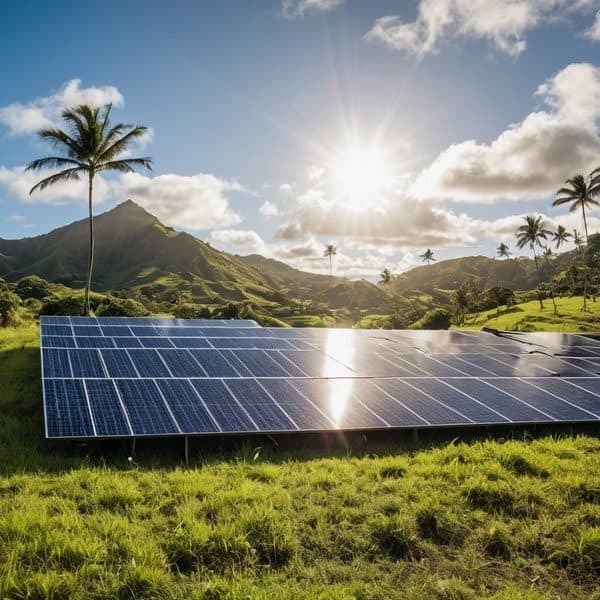
Stiell used the stage to press that climate cooperation must be central to addressing both economic and environmental threats, arguing that the fastest route out of the squeeze is to accelerate the global shift off fossil fuels. “Clean energy offers security and affordability — returning sovereignty to nations and their peoples,” he said, adding that negotiations remain important but must now convert into concrete projects on the ground.
The UN official pointed to the Paris Agreement’s progress to date — including commitments advanced at the first global stocktake at COP28 — but urged measurable acceleration before the next review. “So that by the second global stocktake at COP33, we are on track to meet the commitments made at the first,” Stiell said, calling for the Action Agenda to be elevated “to share centre-stage with negotiations” as a vehicle to mobilise finance and accelerate implementation. He told delegates the Action Agenda has already been “mobilizing trillions of dollars within the real economy” and is driving an “irreversible” clean energy transition, but said its full power must be unleashed across both the global North and South.
Stiell highlighted priority areas where rapid action can deliver tangible gains, including energy systems, methane reduction and food systems. “Methane is an ultra-potent greenhouse gas. Slashing emissions by 2030 will have a huge impact on putting the brakes on global heating,” he said, and stressed resilience measures such as early warning systems that save lives.
The remarks add to an intensifying UN push for rapid deployment of renewables and finance to support developing countries. Secretary‑General António Guterres, speaking in parallel at the Dialogue, urged nations to “unleash the renewables revolution,” language reflected in the conference’s focus on implementation over diplomacy alone.
For Fiji and other Pacific island countries, Stiell’s warnings and the Action Agenda’s implementation emphasis reinforce long-standing regional concerns. Pacific governments and analysts have repeatedly flagged exposure to volatile fuel markets — heightened this year after oil prices surged amid Middle East hostilities — and the knock‑on effects on food security, transport and national budgets. Past reporting from the region has highlighted calls from Fijian leaders for climate justice and for substantial international finance to help island states transition away from fossil fuels.
By reframing the present moment as an economic as well as an environmental crisis, Stiell’s address at the Petersberg Dialogue underscores why negotiators and financiers must now pivot from pledges to projects. The message is clear for small island states: accelerating the clean energy transition and securing predictable finance are not only climate priorities but essential strategies for economic stability and sovereign policy space in an unstable global landscape.