Palau’s president has begun a historic first state visit to New Zealand as a new security report raises fresh concerns about the scale and conduct of the United States’ military buildup in the Pacific island nation, including allegations that large tracts of land were cleared without required environmental approvals.
The Micronesia Security Outlook 2025, published by the Guam-based Pacific Centre for Island Security, includes a Palau chapter authored by Jodean Remengesau, director of the Bureau of Agriculture in Palau’s Ministry of Agriculture, Fisheries and the Environment. Remengesau’s assessment says “the guardrails built into agreements between the United States and Palau to protect the Pacific nation’s environment and preserve its sovereignty are rendered ineffective by the accelerated military buildup,” and that many Palauans have been left out of consultations.
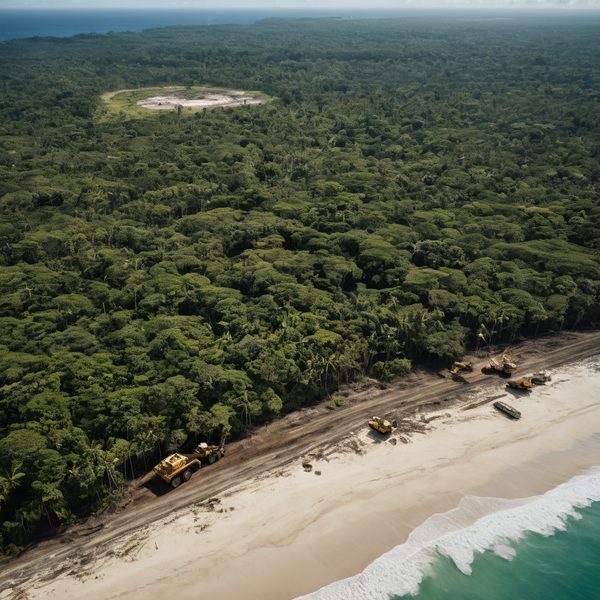
The report documents one high-profile instance on Angaur, one of Palau’s 16 states, where it says the U.S. military cleared 271,807 square metres of land for the first site of a tactical mobile over-the-horizon radar system without obtaining an environmental earthmoving permit or carrying out the community consultations required by Palauan law. Remengesau charges that debris from the clearing — “piles of shredded tree debris” — created a risk of invasive coconut rhinoceros beetle infestation and were later dumped on residents’ yards in what he describes as a rushed effort to deal with the problem.
Angaur’s governor, Steven Salii, filed suit in 2023 against Palau’s central government, the Palau Environmental Quality Protection Board, the U.S. government and its contractors, alleging violations of Palau’s environmental laws and the Compact of Free Association over the land disturbance. The report reiterates those allegations and highlights the legal and reputational risks that follow when domestic environmental processes are bypassed.
Under the renegotiated Compact of Free Association that took effect with a new funding cycle on October 1, 2023, the United States pledged an US$890 million assistance package to Palau over 20 years and retains responsibility for Palau’s defence. The report acknowledges that the compact gives the U.S. military extensive access to Palauan land, waters and airspace, but stresses that such access is conditioned on meeting environmental standards — obligations the report says have not been adequately upheld.
The document also notes the broader strategic context: rising U.S.–China geopolitical competition has intensified military activity across Micronesia. The U.S. radar project cited in the report, a US$118 million programme, is expected to be operational this year. Remengesau and the Pacific Centre for Island Security argue the rapid pace and scale of infrastructure installations have outstripped Palau’s regulatory capacity and public consultation processes.
Palau’s state visit to New Zealand, described in regional bulletins as a “historic first,” brings the country’s leadership to a key regional partner at a time of heightened scrutiny over how security partnerships are being implemented on the ground. The report warns that while compact funds and foreign aid have become a significant portion of Palau’s national budget, the resulting strategic alignment with external powers risks compromising the “peace and sovereignty” Palauans have historically enjoyed.
The Pacific Centre for Island Security’s findings add to an evolving debate over how Pacific island states balance security partnerships, environmental protection and local governance. With legal action already under way in Angaur and new installations due to come online this year, the issues raised in the report are likely to feature in both domestic discussions in Palau and regional diplomatic exchanges during the president’s visit.
Leave a comment