Palau’s increasing role in Pacific security was thrust into the spotlight this week as President Surangel Whipps Jr. completed a historic first State visit to New Zealand and a new Guam‑based security analysis raised fresh concerns about the scale and conduct of the US military buildup on Palauan soil. The Pacific Centre for Island Security’s Micronesia Security Outlook 2025, with the Palau chapter authored by Jodean Remengesau of Palau’s Bureau of Agriculture, Fisheries and the Environment, says long‑standing environmental and sovereignty “guardrails” are proving ineffective as construction accelerates.
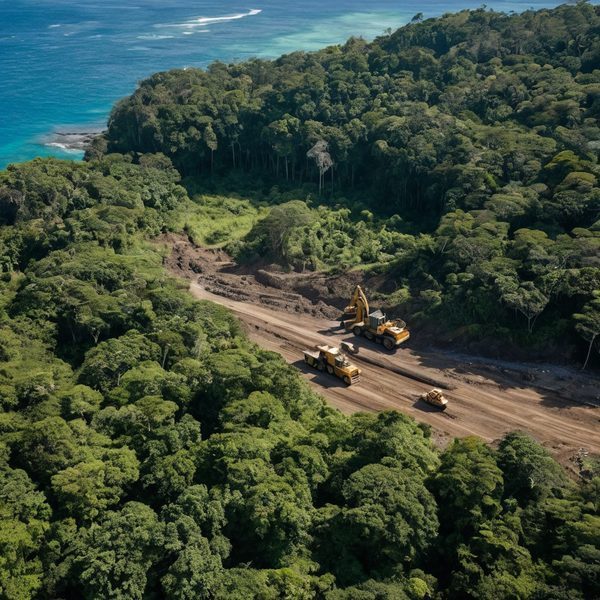
Remengesau writes that while the Compact of Free Association gives the United States broad rights to use Palauan land, waters and airspace, it also requires adherence to Palauan environmental standards. “The U.S military had missed and fell short of fulfilling its duties and responsibilities under the compact,” he states, citing an instance on Angaur where land was cleared for a site of a tactical mobile over‑the‑horizon radar system without an environmental earthmoving permit or community consultations required by Palauan law.
The report sets out concrete details: contractors cleared some 271,807 square metres in Angaur, and the debris from that clearing — shredded tree material — was left in a way that invited invasive coconut rhinoceros beetle infestation and was later dumped on residents’ yards in a rushed attempt to manage the problem. Angaur Governor Steven Salii lodged a lawsuit in 2023 against Palau’s central government, the Palau Environmental Quality Protection Board, the US government and its contractors, alleging violations of Palau’s environmental laws and compact obligations over the unauthorised clearing.
The timeline of increased US activity is explicit in the report. Under the renegotiated compact, the United States pledged an US$890 million package to Palau spread over 20 years, a cycle that began on October 1, 2023. As geopolitical competition with China intensifies in the region, the US has scaled up projects in Palau, including a US$118 million radar installation the report says is expected to be operational this year. The analysis also notes an earlier public framing of a shoreline radar system as a single, mutually used infrastructure was revealed to consist of two separate towers — a detail that has fed local unease over transparency and intent.
The report argues Palau’s reliance on compact funds and international aid, which make up a sizable portion of the national budget, increases the likelihood of deeper military use of Palauan territory and further compromises the nation’s autonomy as residents have experienced it. It calls attention to how accelerated militarisation can undercut the protective measures built into agreements designed to safeguard Palau’s environment and community rights.
Whipps’ State visit to New Zealand, a diplomatic first for Palau, comes as these questions gain prominence internationally and regionally. The visit gives Palauan leaders a broader platform to discuss both security partnerships and the domestic concerns raised by the report, including calls for better enforcement of environmental safeguards, fuller community consultation and greater transparency about the scope and nature of defence infrastructure on Palauan islands.
Leave a comment