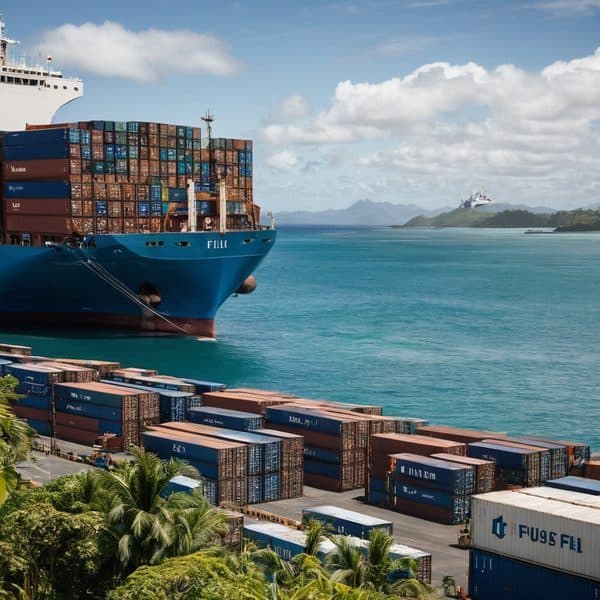
Pacific shipping — the lifeline that links remote island communities to food, fuel and medicine — is facing a growing crisis that experts say can no longer be addressed by piecemeal fixes. Regional researchers and maritime practitioners are now pressing for a rapid, Pacific-tailored shift to wind-assisted and other low‑carbon propulsion technologies as a short‑to‑medium term remedy to runaway fuel costs, aging fleets and climate pressures.
Speaking at a recent regional discussion on low‑carbon maritime transport, Natasha Chan of the Micronesian Centre for Sustainable Transport described the scale of the problem: long routes, limited trade volumes, high insurance and connectivity costs, and a dependence on old or donated vessels that are expensive to operate and maintain. “Shipping is for us as railways, canals and freeways are for developed countries,” Chan said. “It is our absolute lifeline.” She warned the sector is trapped in a cycle where lack of investment and insurance capacity obliges operators to rely on end‑of‑life ships and under-resourced workforces.
What is new in the debate is renewed evidence — and renewed urgency — for wind‑assisted propulsion. Researchers point to tests in the Pacific during the 1980s fuel crisis that showed roughly 30 percent fuel savings from wind systems. More recent analyses cited in the discussion suggest that, with the right combination of modern materials, designs and operational changes, savings of at least 40 percent are attainable today using mature technologies when applied correctly in the Pacific context. Advocates say wind‑assisted technologies are a practical near‑term option where hydrogen and other zero‑carbon fuels remain unsuitable or unaffordable for the region’s small coastal and domestic vessels.
The push for wind and other fit‑for‑purpose solutions comes amid broader moves to strengthen maritime governance in the Pacific, including the International Maritime Organization’s regional presence in Suva and domestic regulatory reforms such as mandatory shipwreck insurance. Experts stress that progress will require development and climate finance models tailored to the Pacific’s vessel sizes and trading patterns, plus investment in local research, workforce training and sustained maintenance systems.
The regional bulletin carrying the shipping update also highlighted a series of other developments that underscore the vulnerability and resilience issues facing Pacific countries. Timor‑Leste President José Ramos‑Horta warned his country is susceptible to infiltration by foreign organised crime, a reminder of security risks in maritime domains. Fiji’s Climate Change Minister has outlined priorities to accelerate Pacific climate action, signalling national policy alignment with calls for transport decarbonisation.
Health and community pressures were also evident: Gizo hospital in the Solomon Islands has declared a state of emergency, and PNG Health Minister Kapavore publicly praised a visiting Chinese medical ship for its support. In education, the University of the South Pacific has doubled student support in response to a global crisis. Religious and civic engagements continue, with a World Council of Churches representative slated to attend the Pacific Church Leaders’ Meeting in Fiji. In Vanuatu, Prime Minister Napat launched Emua Vila, the country’s first economic micro‑hub, intended to bolster local commerce.
Economic stressors that feed into the shipping crisis remain acute. Trade unions and community leaders cautioned that recent or proposed fuel price increases will sharply affect Fijian workers, while business and government reforms continue to grapple with derelict vessels, insurance gaps and the need for resilient supply chains.
Taken together, the latest developments reinforce a single message from Pacific experts: decarbonisation of domestic and regional shipping is not just an environmental priority but an urgent operational and security necessity. The region’s leaders and funders now face the test of turning decades‑old lessons — and 1980s fuel‑crisis experiments — into concrete financing, retrofitting and vessel‑design programmes that can keep islands connected in a volatile world.
Leave a comment