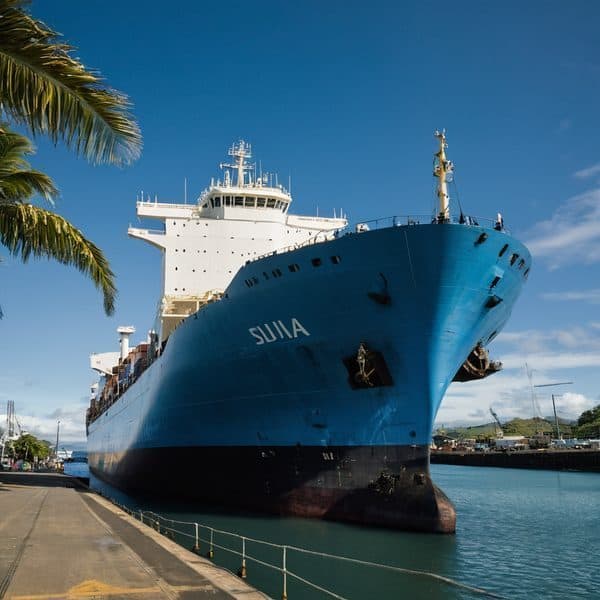
Pacific Island shipping — the lifeline for fuel, food and medical supplies — is at a tipping point, and regional experts are pushing an accelerated shift to wind-assisted and other low-carbon propulsion technologies to avert a crisis, Pacific transport specialists warned on Friday.
Speaking at a regional discussion on low-carbon maritime transport, Natasha Chan, assistant legal researcher at the Micronesian Centre for Sustainable Transport, said Pacific nations are uniquely exposed to rising fuel costs, ageing fleets and service gaps that can leave communities isolated when ships are delayed. “Shipping is for us as railways, canals and freeways are for developed countries… It is our absolute lifeline,” Chan said, describing a system beset by very high connectivity costs, long distances between small population centres and a chronic reliance on end-of-life or donated vessels.
The new push comes amid mounting evidence that practical, near-term technologies can deliver substantial fuel and emissions savings for the region. Chan pointed to research indicating that fuel savings of at least 40 percent are achievable today if mature technologies are correctly adapted to Pacific conditions and backed by suitable financing. Wind-assisted propulsion — using modern sails, rotors or kites to reduce engine load — was singled out as one of the most realistic immediate options. Earlier tests in the Pacific during the 1980s recorded roughly 30 percent fuel savings; proponents say modern materials, designs and retrofit approaches could increase those gains.
But the experts cautioned that global advances in hydrogen, ammonia and large-scale clean-fuel shipping do not automatically translate to Pacific needs. “What is not happening is the investment in research and development at our scale of vessels,” Chan said, warning against simply scaling down international market leaders without targeted design, testing and finance for short-sea and inter-island services. She urged development and climate finance modalities that recognise the unique operating environment of Pacific domestic fleets.
The call for a wind-powered transition ties into an evolving regional policy picture. Fiji and other Pacific governments have taken recent steps to strengthen maritime safety and accountability — including Fiji’s derelict vessel removal programme and proposals for pre-entry shipwreck insurance — while the International Maritime Organization has established a regional presence in Suva to help coordinate decarbonisation and safety initiatives. Global talks at the IMO are also moving toward stricter emissions regimes, which could increase pressure on shipowners servicing the Pacific.
Advocates say practical pilot programmes and retrofits, targeted R&D for vessel sizes and routes common in the Pacific, and financing mechanisms to de-risk conversions are immediate priorities. Without them, the region risks repeated supply shocks: empty store shelves, fuel shortages and disrupted health and education services in remote communities. Chan framed the transition as both a resilience and climate imperative — one that can deliver cost savings now if international donors, regional institutions and commercial operators align behind Pacific-tailored solutions.
This is the latest development in an ongoing conversation about how small island states can decarbonise and secure essential maritime links. As momentum builds for tested, wind-based technologies, Pacific leaders and technical partners will face urgent decisions about funding, pilots and regulatory reform to convert promise into reliable services for island communities.
Leave a comment