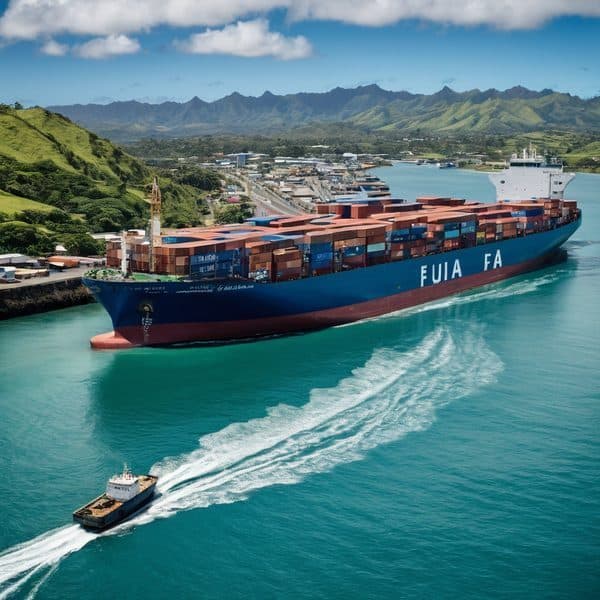
Pacific shipping lifelines are at a crisis point and regional experts are urging a rapid shift to wind-assisted propulsion and other low‑carbon technologies to blunt the impacts of rising fuel costs, ageing fleets and climate change, a regional discussion in Majuro has heard.
“Shipping is for us as railways, canals and freeways are for developed countries,” Natasha Chan, assistant legal researcher at the Micronesian Centre for Sustainable Transport, told the forum on 10 April 2026. Chan said Pacific island nations remain heavily dependent on imported fossil fuels and older, often donor‑supplied vessels, leaving supply chains — and the communities they serve — exposed to price shocks and breakdowns. Delays, she warned, translate directly into empty store shelves, fuel shortages and isolation for remote communities.
Chan pointed to research and past Pacific trials that suggest concrete near‑term gains are possible. Wind‑assisted propulsion systems were trialled in the region during the 1980s fuel crisis and delivered fuel savings of roughly 30 percent; modern materials and designs, she said, could improve those numbers and, combined with other mature technologies, yield fuel savings of at least 40 percent if deployed appropriately for the Pacific’s unique operating conditions. At the same time, she cautioned that some global innovations — like hydrogen‑powered ships being trialled by larger economies — may not be readily transferable to short‑haul domestic and regional services here without targeted research and scaled‑down investment.
The Majuro discussion framed the latest push as more than a technical exercise: proponents argue a deliberate Pacific strategy — blending policy reforms, tailored research and climate financing — is needed to break a cycle in which limited investment and insurance capacity forces operators to rely on old or end‑of‑life vessels. That argument builds on momentum created by earlier regional moves: the International Maritime Organization opened a Pacific Regional Presence office in Suva in 2025 to help align technical and policy support for decarbonisation, and Fiji has moved to tighten maritime oversight in recent months by confronting derelict vessels and proposing pre‑entry shipwreck insurance requirements.
The call for rapid transitions comes against a wider backdrop of national vulnerabilities flagged across the Pacific this week. Timor‑Leste President José Ramos‑Horta warned that the country is vulnerable to “infiltration by foreign organised crime”, underscoring security as well as economic risks in the maritime domain. In the Solomon Islands, Gizo hospital declared a state of emergency, a reminder of how fragile services can be when transport and logistics falter. Closer to policy levers in Suva, Fiji’s Climate Change Minister has set new priorities to accelerate regional climate action, work that could dovetail with shipping decarbonisation plans.
Advocates say the case is urgent: rising fuel prices will disproportionately hit workers, households and small businesses across the region, and more resilient, lower‑fuel systems would reduce that pressure while cutting emissions. Practical steps highlighted at the Majuro forum included pilots for wind‑assisted technology on domestic vessels, targeted R&D funding for small ship designs suitable to Pacific routes, and revisions to insurance and financing instruments to make modern retrofits and new‑builds viable for local operators.
The Majuro discussion aligns with other recent developments in the Pacific — from support for students and health missions to new micro‑hubs and church‑led gatherings — that collectively underline the need for resilient, reliable maritime services. For island nations that span millions of square miles and depend on coastal shipping as a lifeline, experts say accelerating wind‑assisted and other pragmatic low‑carbon options is among the most tangible steps available now to shore up supply chains and cut emissions.
Leave a comment