
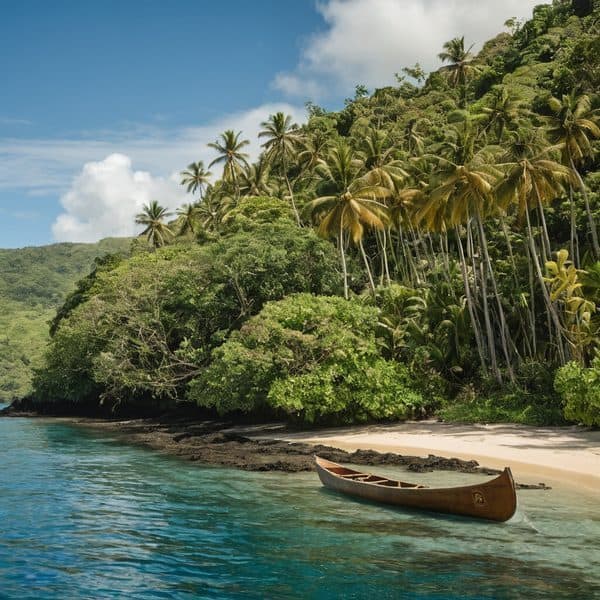
The Soko ni Nuinui — translated as the Voyage of Hope — was launched earlier this month as a faith-driven climate initiative that will take a sailing vessel to eight island locations around Fiji on a planned 50-day itinerary, organisers said, marking a new, community-centred approach to climate engagement in the archipelago.
Announcing the programme, Climate Change Commissioner for the Anglican Church of Aotearoa, New Zealand and Polynesia, Fe’iloakitau Kaho Tevi, described the voyage as both spiritual pilgrimage and practical training. While organisers have set a 50-day, eight-stop framework, Tevi emphasised that an exact timetable for when the voyage will run has not been finalised, noting the work behind the plan stretches back at least a year at commission level. “The eight locations and parishes coordination model combines diocesan leadership, local parish leadership, and embedded facilitator training,” he said.
The Voyage of Hope is built so each stop functions as a facilitator workshop and parish-led programme, with a standard weekly session format that pairs spiritual reflection with practical action. Every session is intended to include prayer, scripture, talanoa (dialogue), skills practice, action planning, commitment cards and follow-up arrangements. Tevi said the design deliberately links theological reflection to concrete community outcomes: “The programme is therefore structured so that theological reflection always leads to concrete action in the community.”
Organisers have factored in operational and social challenges common to outreach in dispersed island settings. The strategic framework addresses potential obstacles ranging from weather and transport disruptions to language barriers, low attendance, heated discussions and trauma-sensitive situations. The plan envisages a full support team at each stop — co‑facilitators, youth helpers, worship leaders, pastoral care contacts, transport and safety planners, and communications support — alongside diocesan champions and parish priests to ensure consistent delivery across dioceses. Archbishop Sione Ulu’ilakepa is named among church leaders expected to provide oversight and support.
A distinguishing feature of the project is the active role allocated to local communities. Facilitators are instructed to consult with elders, collect local ocean stories, assess language needs, adapt examples to the particular cultural context of each place, plan culturally appropriate openings and make accessibility and safety arrangements. Tevi said this parish-led approach aims to create local ownership of climate actions, with each community expected to identify and commit to follow‑through measures after workshops conclude.
The faith-based maritime model taps into longstanding Pacific practices of seafaring and community ritual, and organisers argue it offers a flexible way to reach remote settlements that are often overlooked by conventional climate programmes. By combining worship and scripture with skills training and action-planning tools, the voyage aims to mobilise church networks for adaptation, resilience and local stewardship.
The launch represents the latest development in an expanding set of Pacific climate initiatives that increasingly blend faith, community leadership and technical planning. With preparatory work reported to have taken at least a year, organisers now face the task of finalising exact voyage dates and coordinating across dioceses, weather windows and transport logistics before the ship sets sail.