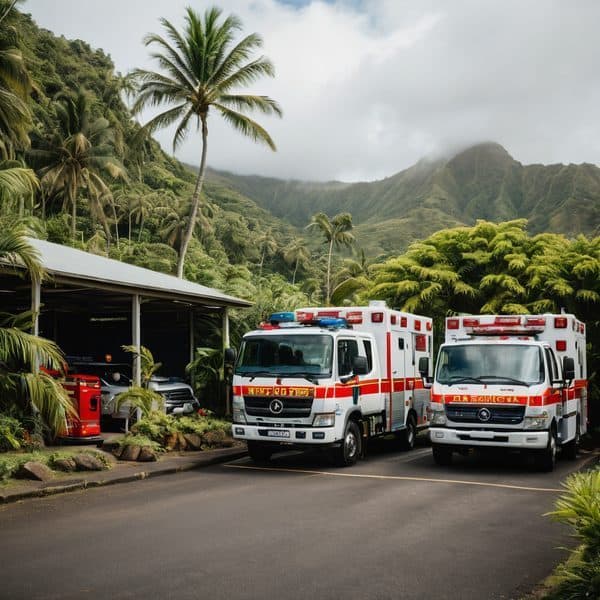
Latest development: Fiji’s emergency medical response remains limited and uneven as the country operates with fewer than 20 ambulances nationwide, many of them poorly equipped and with some regions experiencing periods of no operational coverage, industry and sector sources warn. That shortfall, combined with a system that often prioritises inter-hospital transfers over rapid scene response, has prompted new roles for other agencies and fresh adjustments across the tourism sector.
There is no nationally deployed paramedic service in the conventional sense, and emergency care outside hospital settings continues to rely heavily on who is available to drive ambulances, how quickly they can mobilise and what resources are at hand. Recent data cited by tourism industry stakeholders confirm the small fleet size and point to chronic gaps in equipment and geographic coverage that become starkly apparent when incidents occur away from main urban centres.
A notable shift is the National Fire Authority (NFA) stepping into a more active emergency role. With new funding and equipment upgrades now in place, fire crews are increasingly handling ambulance work and emergency medical call-outs, and ambulance duties are accounting for a growing share of the NFA’s workload. Officials say these changes show both intent and progress toward a more integrated response, but also underline that Fiji remains in transition in building a fully coherent emergency medical system.
Cost and access present another complication. The island nation’s singular emergency medical service capability can be expensive; providers frequently require confirmation of insurance cover before undertaking transport or definitive care. That policy — aimed at managing limited resources and ensuring payment — often shocks both visitors and locals, industry sources say, and creates the perception that emergency help is conditional rather than immediate.
The tourism sector has reacted pragmatically. Hotels, resorts and transport operators have strengthened in-house emergency preparedness: staff training in CPR and basic first aid has been expanded, defibrillators are increasingly standard equipment, and emergency protocols focus on rapid stabilisation and moving patients to definitive care as quickly as possible. Operators stress that their role is to provide immediate lifesaving interventions and safe transport, not to substitute for trained paramedics or hospitals.
Industry leaders warn the mismatch between visitor expectations — rapid ambulance response, highly trained paramedics and a seamless chain of care — and on-the-ground realities risks reputational damage. A single high-profile incident that does not meet expectations can quickly alter perceptions of Fiji’s safety, amplified by social media and word-of-mouth. The current situation is therefore both operational and perceptual: improving vehicles and equipment is necessary but not sufficient without clearer coordination, funding and public communication about what emergency services visitors and communities can expect.
Stakeholders say the latest developments should accelerate national discussions on emergency medical services: expanding and better equipping ambulance fleets, formalising roles for agencies such as the NFA, clarifying insurance and cost policies, and supporting tourism operators’ preparedness efforts. For now, the sector continues to adapt on the ground while urging more systemic reforms to align capability with the safety expectations that underpin Fiji’s tourism brand.
Leave a comment