
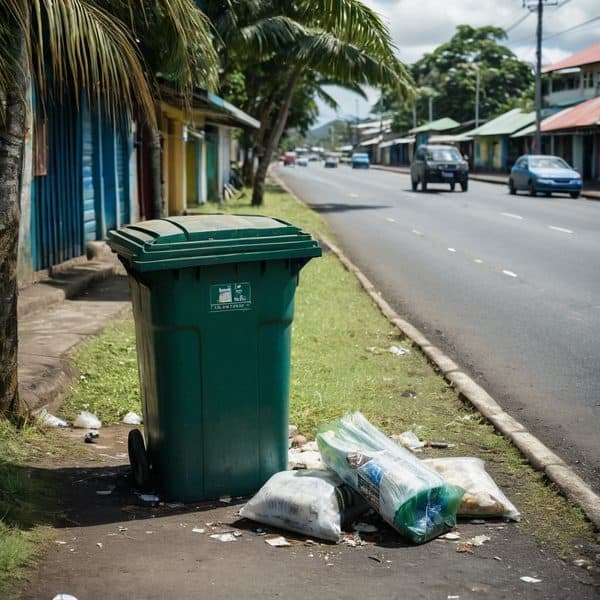
Minister for Environment and Climate Change Lynda Tabuya this week tabled the Litter (Amendment) Bill 2026 in Parliament, unveiling a package of tougher laws and enforcement tools aimed at stamping out longstanding illegal dumping and day-to-day littering across Fiji. The amendments target gaps in the 2008 Litter Act by boosting penalties, expanding enforcement powers, and introducing new offences and accountability measures — including for parents and guardians of minors who litter.
Tabuya told Parliament the existing law “has not kept pace with the realities we face today,” pointing to changing waste streams and a rise in illegal dumping. She cited a wider variety of modern wastes — electronics, solar panels, car batteries, diapers, construction and industrial waste — as factors that require the law to be updated. “The scale of illegal dumping has increased, waste streams have changed, and the law must now catch up. This is what this Bill seeks to do,” she said.
Among the key new powers, litter prevention officers would be authorised to require valid government-issued photo identification from people suspected of littering. The Bill also makes it an offence to place rubbish on streets, footpaths or other public places outside designated collection times. Photographs taken by authorised officers would be admissible as prima facie evidence in court, meaning photos could serve as initial proof to support prosecution of littering offences.
The amendment also places new responsibilities on parents and guardians, who could be penalised if they fail to take reasonable steps to prevent their children — defined as minors — from littering. Supporters say this closes a longstanding accountability gap where blame stopped short of the individual or household level. Opposition MP Premila Kumar welcomed the photographic evidence provision, saying it would encourage the public and authorities to document offences and assist prosecutions. “I really like the idea of encouraging people to take photos of anyone who is littering,” she said in Parliament.
To make enforcement more sustainable, the Bill introduces an “80-20” revenue-sharing model: municipal councils would retain 80 per cent of fine revenue to fund local litter prevention and awareness programmes, while the remaining 20 per cent would go to the Environmental Trust Fund for broader environmental management. Tabuya described this as a practical incentive for councils to invest in ongoing waste management and compliance activities.
The Bill’s timing follows other recent moves to bolster waste management capacity: the Ministry of Environment has been training hundreds of litter prevention officers and municipalities have received new garbage trucks in efforts to improve collection and enforcement. Enforcement has historically been a weakness under the 2008 Act, with low penalties, difficulty identifying offenders and inconsistent monitoring. The amendments aim to close those gaps, but will now need to progress through parliamentary debate and any committee scrutiny before becoming law.