
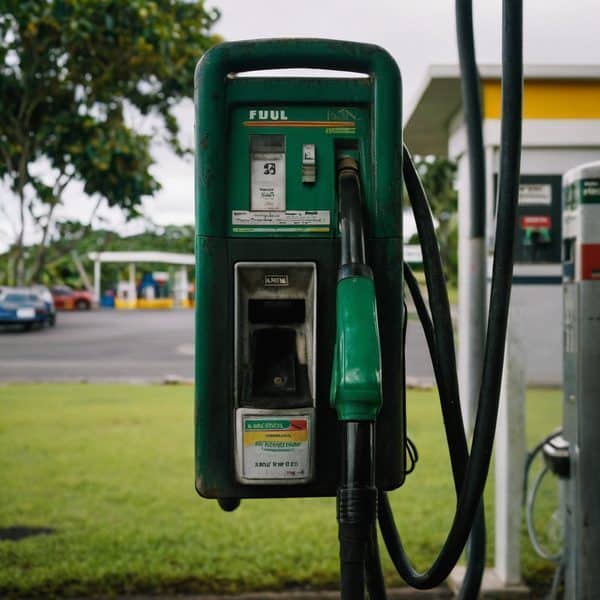
Fiji has enough fuel for now but households and businesses face continued price pain as the government moves $56 million from its 2025–26 Budget to blunt the impact of a global fuel price spike, Prime Minister Sitiveni Rabuka announced this week.
Rabuka told media the immediate supply picture is stable. “As of the 19th of April 2026, Fiji’s fuel supply remains stable,” he said, reporting about 45 million litres on land and a further 22 million litres expected to arrive before the end of April — roughly 67 million litres available this month. Daily consumption remains around 2.5 million litres, he said, and the apparent fall in stocks toward the end of a cycle is routine: normal usage will see supplies draw down to roughly 40 million litres, or about 29 percent of storage capacity, by the end of April.
The prime minister sought to draw a clear distinction between supply and cost. “This is not a fuel shortage crisis. This is a global price crisis,” Rabuka said, pointing to the war in the Middle East, disruptions to shipping through the Strait of Hormuz and higher global market costs that push up prices paid in US dollars. He noted the independent regulator, the Fijian Competition and Consumer Commission (FCCC), set higher domestic prices on April 1 to reflect increased purchase costs and warned consumers to expect another rise when the regulator reviews prices in May.
To blunt the domestic fallout, Cabinet on April 21 approved the redeployment of $56 million (US$39.95 million) from delayed projects within the existing budget to provide immediate support. Rabuka emphasised the funds are not new borrowing but a reprioritisation to “protect livelihoods, maintain essential services, and support the most [vulnerable],” underscoring the government’s intention to shield households, transport operators and critical services from the worst effects of higher international prices.
The supply outlook brightens in May, Rabuka said, because fuel suppliers have committed to deliver about 118 million litres next month. Once those shipments are received and discharged, national stocks are expected to rebound to more than 59 percent of storage capacity, he said, signalling that the country’s physical fuel security should recover as shipments arrive. For now, the government describes Fiji’s status as Phase 1 — a normal supply situation under pressure from high global prices.
The announcement builds on earlier reports and government assurances since March that Fiji was monitoring risks from rising tensions in the Middle East. Analysts and officials have warned for weeks that any sustained disruption to flows through the Strait of Hormuz could lift global crude and refined product prices, which are passed on to Fiji because fuel is bought in US dollars and subject to international market movements. That dynamic, rather than a local shortage, is driving the current squeeze on household budgets and business operating costs.
With the price regulator likely to factor April’s and early-May market movements into its next review, households and transport operators will be watching closely for the timing and scale of any new domestic fuel price adjustments. The government’s redeployment provides short-term fiscal room to respond to hardship, but Rabuka’s warning of continued global pressure makes clear the wider cost shock could persist until international tensions ease or global markets stabilise.