
Prime Minister Sitiveni Rabuka has sought to reassure Fijians that the nation’s fuel supply is secure while warning that higher prices will continue to bite, announcing a $56 million (US$39.95 million) budget redeployment to ease the impact on households, businesses and essential services.
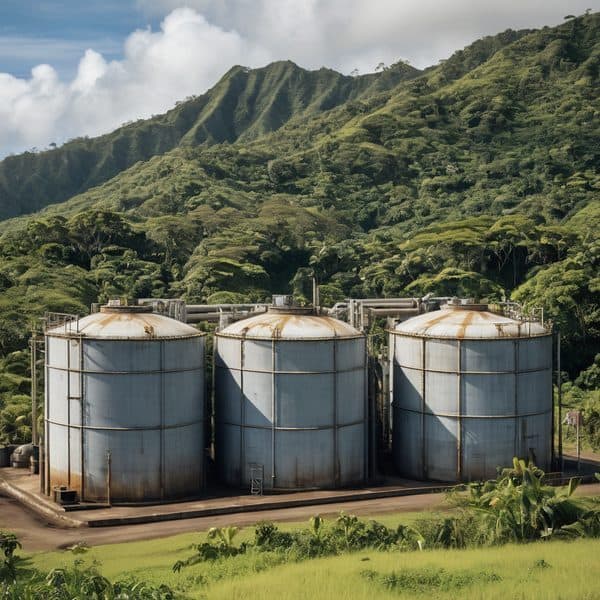
As of April 19, 2026, Rabuka said Fiji held about 45 million litres of fuel on land, with an additional 22 million litres due to arrive before the end of the month. That gives a total available supply for April of roughly 67 million litres — close to half of national storage capacity — against a steady daily consumption of around 2.5 million litres. He told media the expected drawdown to about 40 million litres (around 29 percent of capacity) by month’s end is routine, part of the normal cycle to make space for incoming shipments.
Looking ahead, Rabuka said suppliers have committed to deliver about 118 million litres in May, which should lift national stocks to more than 59 percent of storage capacity and restore a stronger buffer. “We are currently operating in Phase 1 — a normal supply situation, but under pressure from high global fuel prices,” he said, underlining that supply continuity is not the immediate problem.
The prime minister emphasised that the core issue is cost, not scarcity. He attributed recent price rises to surging international prices driven by the war in the Middle East and shipping disruptions, including closures around the Strait of Hormuz. Because Fiji purchases fuel in US dollars, international price movements are passed through to the domestic market. Rabuka also made clear that the April 1 price increase was set by the independent price regulator, the Fijian Competition and Consumer Commission (FCCC), and not by government, and warned consumers to expect another adjustment in May.
To blunt the impact on vulnerable groups, Cabinet on April 21 approved the redeployment of $56 million from the existing 2025–2026 budget to a targeted response. Rabuka stressed this is not new borrowing but a reprioritisation of funds from delayed projects to provide immediate support. He said the package is aimed at protecting livelihoods, maintaining essential services and supporting families, businesses and transport operators most affected by rising fuel costs, although he did not detail specific measures or beneficiary amounts in his statement.
The update supplies firmer numbers to a developing story that has been monitored since early March, when government and regulators warned of risks from escalating tensions in the Middle East and potential disruption to supplies transiting the Strait of Hormuz. Those earlier warnings prompted heightened surveillance by the FCCC and other agencies; this latest briefing gives the public a clearer picture of stocks, expected shipments and the fiscal measures now being used to respond to the global price shock.
Rabuka’s message was twofold: Fiji’s physical fuel supply is stable through the immediate months, but global market dynamics — over which the country has little control — will keep domestic prices under pressure. Authorities will continue to monitor shipments and market movements, and the government says the redeployed funds will be used to soften the blow while longer-term adjustments are considered.