
SUVA — Prime Minister Sitiveni Rabuka on Wednesday announced a FJ$56 million (US$39.95 million) government response to mounting fuel costs, while stressing that Fiji’s immediate supply remains secure despite global market shocks that are pushing prices higher.
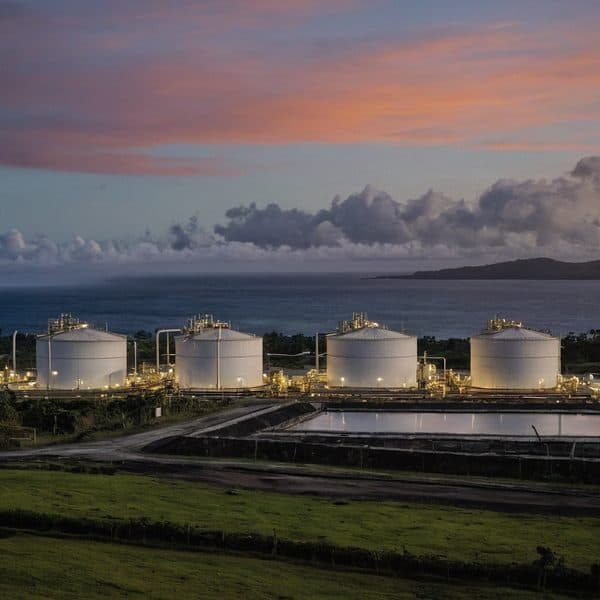
Speaking in Suva, Rabuka said Fiji had about 45 million litres of fuel in storage as of April 19, with an additional 22 million litres expected to arrive before the end of the month, bringing April’s available supply to roughly 67 million litres — close to half of the nation’s storage capacity. Daily consumption remains around 2.5 million litres, he said, and normal drawdowns are expected; officials forecast stocks will fall to about 40 million litres, or roughly 29 percent of capacity, by the end of April as tanks are prepared to receive new shipments.
The government’s $56 million package — approved by Cabinet on April 21 and described by Rabuka as a redeployment of funds from delayed projects within the existing 2025–2026 budget rather than new borrowing — is intended to ease the effect of rising prices on households, businesses and essential services. Rabuka framed the move as an immediate cushion while the country weathers sharp international price movements.
Rabuka emphasised that domestic shortages are not the problem. “This is not a fuel shortage crisis. This is a global price crisis,” he said, pointing to the conflict in the Middle East and disruptions in the Strait of Hormuz that have pushed up international oil costs. He noted fuel is bought in US dollars, so international price increases pass through to the local market. The Fijian Competition and Consumer Commission (FCCC), the independent price regulator, raised domestic fuel prices on April 1 to reflect higher purchasing costs; Rabuka warned another rise is likely in May.
Looking ahead, Rabuka said fuel suppliers have already committed to deliver about 118 million litres in May. Those shipments are expected to raise national storage to more than 59 percent of capacity, restoring a stronger buffer against supply interruptions. The prime minister classified the current situation as Phase 1 — a normal supply position operating under significant price pressure — and sought to reassure consumers and industry that supply chains remain intact.
The announcement marks a shift from earlier government messaging, which concentrated on monitoring developments in the Gulf and cautioning consumers about possible price surges. In March, officials and regulators warned that tensions affecting the Strait of Hormuz could produce volatility in global oil markets and ripple through Pacific import-dependent economies. The new fiscal reprioritisation is the first major government intervention aimed specifically at offsetting the immediate socioeconomic effects of the international disruption.
Rabuka’s package pledges rapid relief while the market adjusts; he said the focus will be to protect livelihoods, maintain essential services and provide immediate support where it is needed most. Further details on how the $56 million will be allocated are expected from ministers in the coming days, as households and transport operators brace for the likely additional price movement in May.