
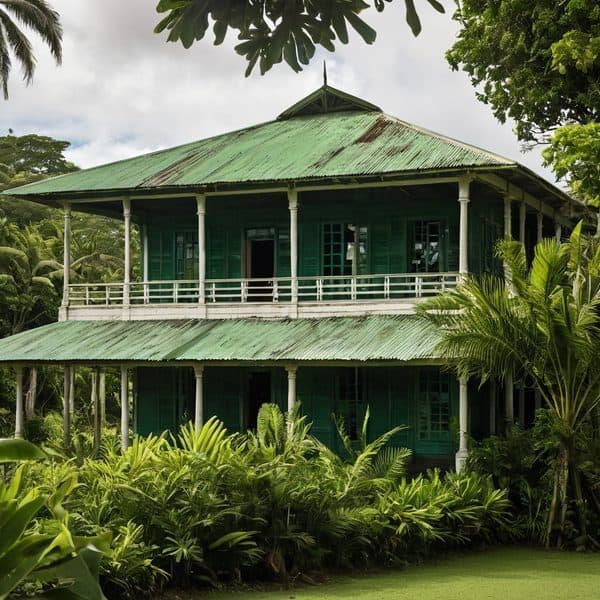
A newly emphasised chapter in James Norman Stevenson’s biography of Leslie Norman Anderson reveals how World War I reshaped Fiji’s towns, businesses and personal fortunes — and how one planter navigated the upheaval to keep Delanasau afloat. Stevenson’s The View from Delanasau: The Life and Times of Leslie Norman Anderson uses Anderson’s experience at the Lekutu plantation in Bua to illustrate how global conflict reached into provincial Fiji and altered the island economy and social ties.
Stevenson documents the broader shift that accelerated with the war: Suva’s emergence not just as the seat of government but as a naval base, communications hub and the primary commercial centre. That reorientation further sidelined Levuka, the old colonial capital, as shipping, planters and firms consolidated around Suva. Local events — notably the capture near Ovalau of the German sea raider Count Felix von Luckner — intensified anti-German sentiment and set the stage for legal and economic interventions against residents of German origin.
What is newly foregrounded in Stevenson’s account is the fate of Anderson’s business partner, Alfred Kniezle, who was German. Enemy property legislation introduced during the war enabled the seizure and liquidation of many German-owned enterprises. Stevenson says Kniezle’s properties were taken and he was declared bankrupt, a collapse that strengthened some commercial rivals. Morris Hedstrom & Co, already influential in Fiji’s trade, moved quickly to acquire former German assets; Delanasau was among the properties that passed into Hedstrom hands.
For Anderson the developments were a turning point. Stevenson reports that, anticipating trouble, Kniezle moved assets into his wife Hilda’s name — an attempt to protect family interests that bought the business a narrow reprieve. Anderson himself faced pressure from relatives to leave Delanasau for Suva, where his accounting skills might find better prospects amid the capital’s wartime expansion. Instead he chose to stay at Lekutu. The new detail in Stevenson’s narrative is that Anderson accepted an invitation from Morris Hedstrom to join a reconstituted partnership and to manage Delanasau under the company’s oversight. That unexpected offer, Stevenson writes, transformed an uncertain situation into one with investment and commercial backing, allowing the plantation not only to survive but to aim for growth.
Stevenson also enriches the human dimension of the story: Anderson’s immersion in plantation life, learning Fijian, and acting as postmaster at Lekutu, through which he tied the community to wider communication networks. He recorded rainfall and winds for officials in Suva and handled letters brought by boat — mundane duties that Stevenson contrasts with the dramatic forces unsettling Fiji’s commercial landscape. Personal loss is noted alongside professional change: Hilda’s father, Sydney Wilson, died in the same year these business upheavals unfolded, a family bereavement that Stevenson links to the intimate costs of the period.
Taken together, Stevenson’s book — and this latest account of Delanasau’s wartime experience — adds concrete detail to how global conflict reconfigured colonial Fiji. It shows how legislation, corporate opportunism and personal choices intersected, producing winners and losers, and how local ties and everyday work at places like Lekutu buffered communities against wider volatility. For readers following the life of Leslie Norman Anderson, the new material clarifies why Delanasau emerged from the war poised to thrive rather than to vanish with the displaced German enterprises.