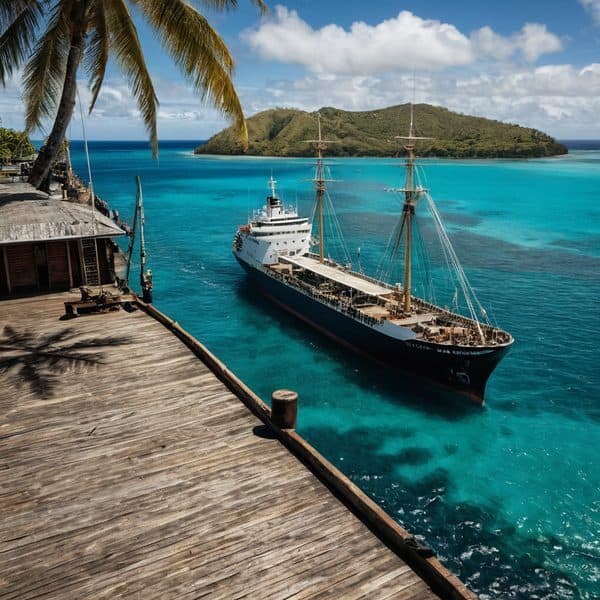
MAJURO — Pacific shipping, the lifeline connecting remote island communities to food, fuel and essential services, is at a turning point as regional experts this week pushed for an accelerated shift to wind-assisted and other low-carbon technologies, saying immediate fuel savings of up to 40 percent are achievable with existing systems when applied to Pacific conditions.
Speaking during a regional discussion on low‑carbon maritime transport, Natasha Chan, assistant legal researcher at the Micronesian Centre for Sustainable Transport, warned that ageing vessels, chronic underinvestment and long, costly routes have left domestic shipping services inadequate across much of the Pacific. “Shipping is for us as railways, canals and freeways are for developed countries,” Chan said, underlining the stakes: for many island communities, a delayed ship can mean empty shelves, fuel shortages and isolation.
What is new in the debate, Chan and other participants said, is the increasingly concrete evidence that mature, commercially available technologies — particularly wind‑assisted propulsion — can deliver substantial fuel savings right now. Research cited at the meeting suggests fuel savings of at least 40 percent are attainable “today with existing, mature technologies” if development and climate financing are properly targeted to the Pacific’s small‑scale, dispersed vessel types. Wind systems tested in the region during the 1980s produced roughly 30 percent savings; organisers say modern materials and designs can push performance higher.
Regional policymakers face a choice between waiting for large-scale clean fuel solutions developed for international deep‑sea shipping — such as hydrogen or ammonia projects being pursued by China, France and Norway — and investing in technology and retrofit programmes tailored to short‑haul, low‑margin Pacific routes. Chan argued the latter is more realistic and urgent: “What is not happening is the investment in research and development at our scale of vessels. It is not a case of simply taking international market leaders and scaling them down.”
The push comes amid mounting policy action in the Pacific. Fiji last year moved to tighten oversight of derelict vessels and explore pre‑entry shipwreck insurance, while the International Maritime Organization established a regional presence office in Suva to help island nations with decarbonisation, safety and pollution control. Advocates at the recent discussion said those institutional steps must be matched by targeted finance — concessional loans, grants and blended funds — plus support for maintenance, crewing and local shipyards to ensure technologies are adopted and sustained.
Industry representatives and researchers urged fast‑tracked pilot projects: retrofits of existing ferries and inter‑island freighters with rotors, kites or wing sails; vessel designs optimised for wind assistance; and coordinated procurement to lower unit costs. They also called for insurance and regulatory reforms to unlock investment, and for donor partners to prioritise solutions that reduce both emissions and the region’s crippling fuel bills.
With prices volatile and climate impacts sharpening, advocates say the window for practical decarbonisation measures is now. The message from the latest Pacific forum is clear: modest investments in wind‑assisted propulsion and bespoke R&D could deliver immediate savings, improve supply resilience for remote communities, and buy time for longer‑term clean fuel transitions.
Leave a comment