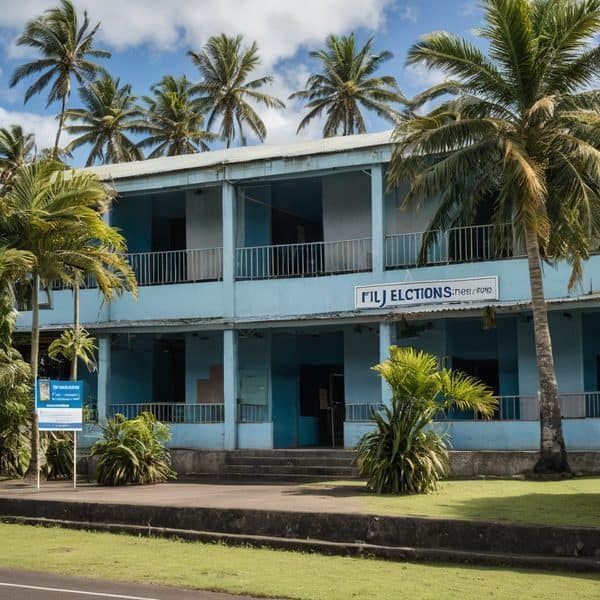
Unity Fiji leader Savenaca Narube has urged the Government to postpone the planned local government elections, arguing the vote should be deferred to conserve scarce state resources ahead of an impending general election. The Fiji Elections Office (FEO) has said the polls will be held on a Saturday in September, but it has not yet confirmed an exact date — a fact Narube says underlines wider problems with the current timetable.
Narube pointed out that the restoration of local government elections was a pledge the Government promised to fulfil early in its term, yet “three and a half years on, we are still not sure of the actual date.” He warned that key preparations, particularly voter education and awareness campaigns, remain incomplete. “With over twenty years without a local government election, this education and awareness must be comprehensive and will take time,” he said.
The Unity Fiji leader also highlighted technical concerns about the ballot system. The reintroduced local polls will use a first-past-the-post ward system, Narube said, and the public needs to be fully briefed on how the new arrangements will work. Without adequate civic education, he warned, there is a risk of confusion at the ballot box and diminished participation in what will be the first local government contests in more than two decades.
Beyond voter preparation, Narube focused on the financial and logistical burden of holding local polls so close to the national election. “The resources needed to hold the local government elections within months of a general election will be a strain on government’s fragile finance,” he said, adding that a looming fuel crisis would further complicate the situation by driving up operational costs and constraining transport for electoral staff and materials.
In light of these concerns, Unity Fiji is calling for the local government elections to be postponed so the state can concentrate resources on the national vote, leaving local elections for the next government to decide. Narube framed the proposal as pragmatic, arguing that concentrating efforts on the general election would avoid overstretching administrative capacity and public funds at a sensitive time.
The FEO’s indication that the polls are targeted for a Saturday in September keeps the electoral calendar under active discussion, but without a confirmed date the debate over timing and readiness is likely to intensify. With more than 20 years having elapsed since the last local government elections, questions over public preparedness, electoral logistics and fiscal prioritisation are emerging as the central issues in the run-up to the dual-election period.
Leave a comment