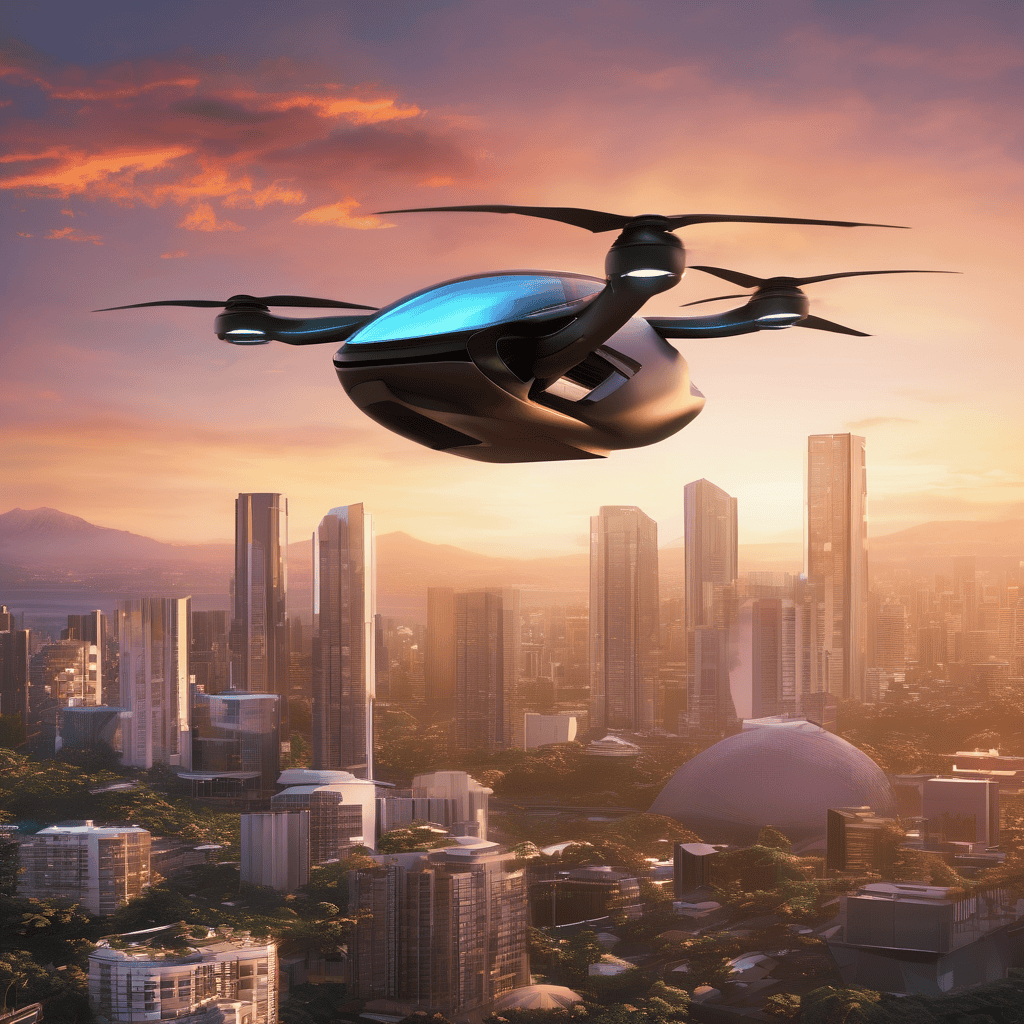
The Trump administration has launched a new pilot program to expedite the development of flying air taxis, focusing on the advancement of electric vertical takeoff and landing (eVTOL) aircraft. The Federal Aviation Administration (FAA) announced that the program would involve at least five projects formed through public-private partnerships with state and local governments and private enterprises. This initiative aims to address the regulatory challenges associated with advanced air mobility and ensure the safe operation of eVTOLs.
Joby Aviation has expressed support for this program, stating that it enables the commencement of aircraft operations in selected markets before obtaining full FAA certification. This step is seen as crucial in preparing for commercial services on a larger scale. Following the announcement, stocks of air taxi companies, such as Joby and Archer Aviation, witnessed an increase, indicating market confidence in the program’s potential.
Electric vertical takeoff and landing aircraft are increasingly being pursued by air taxi firms due to their promise of providing quicker and more sustainable urban transport options. These aircraft are designed for short city routes and connections to airports, offering a solution to urban traffic congestion.
President Donald Trump initiated the program via an executive order in June, reflecting a broader global interest in this innovative transportation technology. Other countries, including India, China, and the United Arab Emirates, are also advancing efforts to deploy eVTOLs, with the potential to transport passengers as early as next year.
FAA Administrator Bryan Bedford emphasized the importance of the pilot projects in guiding the safe integration of eVTOLs into the national airspace. The scope of the projects is diverse, covering short-range air taxis, longer-range flights, cargo and logistics, and applications for emergency management, medical transport, and offshore energy support.
Participants in the program will employ piloted, optionally piloted, or unmanned advanced air mobility vehicles, typically weighing over 1,320 pounds, capable of passenger transport, and designed to safely integrate into existing airspace systems.
The strategic collaboration between government entities and the private sector underscores a significant step towards the future of urban mobility, catering to the growing demand for efficient and eco-friendly transportation solutions. The success of these pilot projects could pave the way for a new era of air travel that is both accessible and sustainable.
Leave a comment