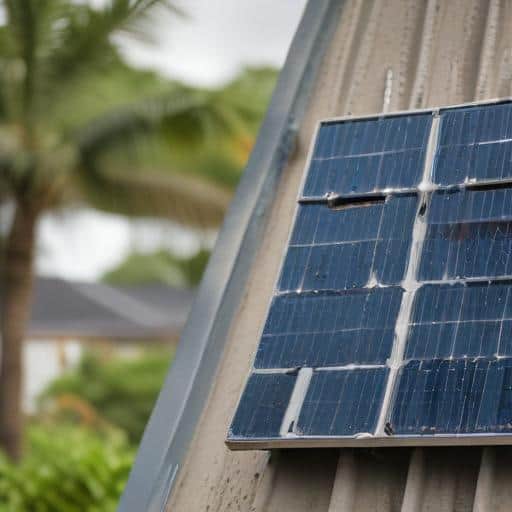
The Fijian Competition and Consumer Commission, in partnership with the Australian Government’s Market Development Facility (MDF), has released findings from a comprehensive solar demand study aimed at understanding the current and potential market for rooftop solar systems in Fiji, particularly in urban areas like Suva. The study, titled “Understanding demand for solar energy in Suva, Fiji,” involved interviews with approximately 5,000 individuals, both face-to-face and online.
Despite Fiji having an established renewable energy sector for over 40 years, with 50-60% of its energy derived from renewable sources, the adoption of rooftop solar remains surprisingly low. The study reveals that households are experiencing energy bills at a minimum monthly cost of $50, alongside frequent power outages, with 94% of those surveyed noting they faced power cuts. Many households are already turning to alternative energy sources, indicating a willingness to invest in backup systems such as diesel generators and solar options.
The research found that 68% of households willing to invest in solar prefer to do so using their own funds, yet an equally significant number—50%—expressed interest in exploring loans or subscription models to finance solar purchases. This denotes a potential opportunity for the development of innovative financial products in the solar sector, aimed at enhancing accessibility for urban residents.
Additionally, the study emphasized the importance of communication in promoting solar energy solutions. Households reported a preference for receiving information about new products and services via social media and word of mouth, highlighting the role of customer testimonials in fostering awareness about the benefits of solar investments.
On the business side, many reported hefty costs due to energy bills and power disruptions, causing a loss of productivity and client relationships. Businesses are increasingly investing in backup energy solutions, underlining a critical need for reliable power sources.
Looking forward, the survey highlighted the need for improved financial services, as only four out of 13 surveyed financial institutions offer targeted solar packages. Opportunities for competitive financial products similar to those available for housing loans could significantly aid the movement towards increased solar adoption.
This promising study outlines a clear interest in solar energy among Fijians, revealing both challenges and opportunities in the market. By addressing financial barriers and enhancing regulatory frameworks, there is a vital pathway for scaling solar energy usage, promoting not only sustainability but also energy resilience in Fiji. The potential for solar energy to play an instrumental role in the nation’s energy future is increasingly evident, heralding a brighter, greener tomorrow.
Leave a comment