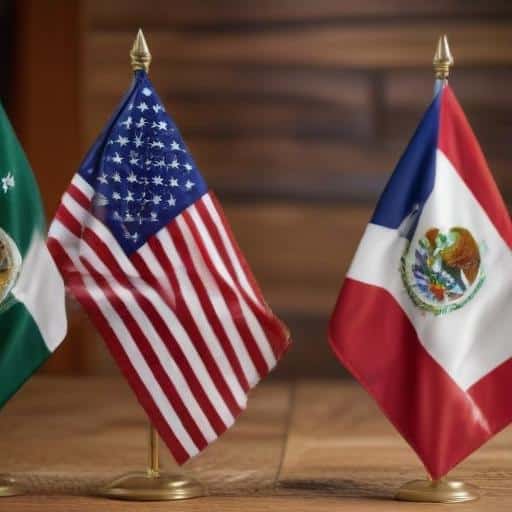
The Trump administration is reportedly pressuring Mexico to investigate and prosecute politicians suspected of connections to organized crime, with the intent of extraditing those with pending criminal charges in the United States. This initiative, highlighted during discussions between U.S. Secretary of State Marco Rubio and Mexican officials, emphasizes the administration’s goal to induce an unprecedented crackdown on narco-corruption within Mexico, particularly targeting lawmakers from President Claudia Sheinbaum’s Mora party.
The U.S. has stressed the importance of both nations collaborating against drug cartels and corrupt officials facilitating their operations. In a tactical approach, U.S. officials have mentioned the possibility of imposing additional tariffs should the Mexican government fail to act. However, Mexico’s foreign ministry has dismissed these claims, stating there have been no requests for investigations of specific politicians.
During a press conference, President Sheinbaum labeled the U.S. claims as “false,” further complicating the diplomatic relationship. In contrast, the U.S. State Department acknowledged that requests for investigations were made but denied that any tariff relief was offered in exchange for compliance.
This development highlights the ongoing complexities of U.S.-Mexico relations, particularly in the context of shared concerns about organized crime and corruption. The pressure on Mexico to take action against its own politicians creates a challenging environment as both nations navigate their commitments to law enforcement and political autonomy.
While the situation appears tense, it presents an opportunity for Mexico to address internal issues of corruption head-on. If taken seriously, these investigations could lead to broader reforms aimed at restoring public trust and enhancing the integrity of political institutions, fostering a potential path for positive changes in governance.
Leave a comment