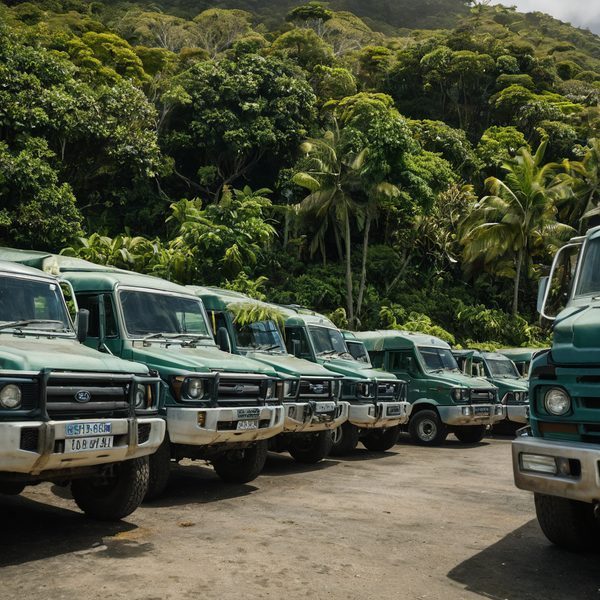
Only one in five government vehicles in Port Vila passed roadworthiness inspections this year, Public Works Department data shows, exposing an endemic compliance problem that inspectors say has persisted into 2024 and 2025.
Road traffic inspector Hilton Matamalele confirmed that just 20 percent of government vehicles met the required roadworthiness standards, a figure he described as “very low” given the clear legal obligations under the Road Traffic Act. The legislation requires all vehicles to undergo inspection; government vehicles are expected to hold a valid roadworthiness certificate and a licence, while private and public transport vehicles face broader sets of requirements.
The Fleet Management Unit has told authorities that around 80 percent of G-plate government vehicles—those registered to government ministries and agencies—have not been inspected. Vanuatu has more than 375 government vehicles in total, meaning a substantial portion of the state fleet has not been checked for basic roadworthiness in Port Vila this year.
Matamalele singled out the worrying fact that even vehicles used by enforcement agencies have failed inspections, naming both police vehicles and those of the Vanuatu Mobile Force among the non-compliant fleet. He said this undermines road safety and operational readiness, as vehicles entrusted with public safety duties are not uniformly meeting statutory standards.
The compliance gap has continued despite repeated reminders from the Public Works Department. Inspection schedules and circulars were routinely circulated to ministries from January to March and again from October to December each year to prepare for inspections, but the low turnout for checks indicates those notices have not translated into action. The problem, Matamalele said, has carried over through 2024 and into 2025.
The department’s findings place renewed pressure on the Fleet Management Unit and line ministries to complete outstanding inspections and bring G-plate vehicles into compliance. With legal requirements clear and a significant share of the fleet unchecked, officials face both a logistical task to catch up on inspections and a political imperative to ensure government vehicles do not contribute to road safety risks. The Public Works Department report is likely to prompt further follow-up from central agencies about how and when the outstanding inspections will be completed.
Leave a comment