An archival profile published in The Fiji Times on September 2, 1998, puts a spotlight on Permal Naicker, a vegetable farmer from the Sigatoka Valley whose disciplined approach to agriculture built a self-sufficient and financially stable enterprise over more than two decades. The feature, republished as a “Back in History” piece, details how Naicker parlayed modest beginnings into a modern farming operation that supplied market vendors in Suva and provided steady local employment.
Born to a farming family in Barara near Sigatoka Town, Naicker and his wife began cultivating land in 1976 when they were both 20. The couple established a small house roughly 200 metres from the Sigatoka River and worked plots that had formerly belonged to a European passionfruit grower. With only a pair of bullocks and a horse to start, Naicker adhered to a strict daily routine — rising at 5am and working through to 6pm — a regimen he maintained for more than 25 years.
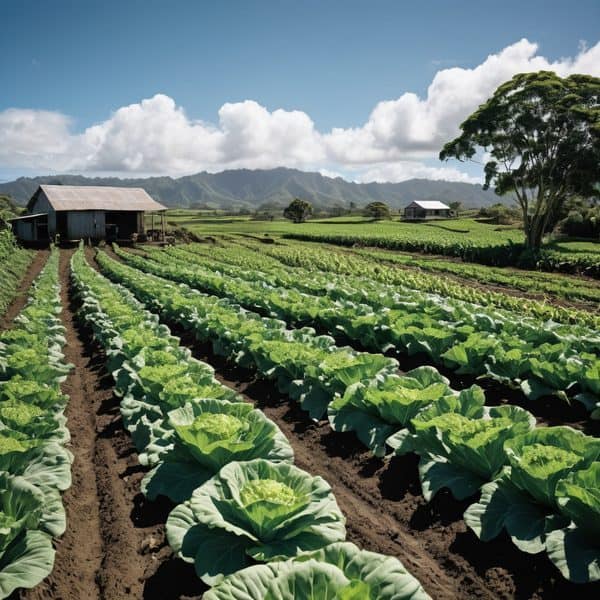
By 1998 Naicker had expanded his operations to three acres, growing a mix of vegetables and fruit including cabbage, eggplant, corn and pawpaw. He credited careful planning and disciplined money management for his success and, by then, was supported on the farm by his three teenage sons. That growth allowed him to move beyond animal power: he invested in a tractor, a three-tonne truck and a family car to transport produce and manage business trips, making regular weekly trips to Suva where market vendors relied heavily on produce from the Valley Road farming belt.
Naicker’s enterprise also became a source of employment for neighbouring communities. The 1998 report noted he regularly hired labourers from Nakalavo and Naduri villages and was held in high regard among neighbouring growers in the Sigatoka Valley. His example of scaling up through reinvestment and hands-on management was presented as a model of commercial farming in Fiji’s Western Division — a region where vision and resilience are often required for success.
Even with the advances, the feature underscored the vulnerability of smallholder farms to the elements. Naicker expressed concern about drought conditions threatening yields and told reporters he was looking into government support for irrigation as a practical solution. “We are looking at ways in which our crops can be maintained despite the drought,” he said in the 1998 interview, adding that government-assisted irrigation “should be an ideal way of tackling such a problem.”
The reprinted profile provides a historical snapshot of a farmer who combined traditional knowledge with incremental mechanisation to meet market demand, while also highlighting long-standing challenges for the sector. Naicker’s 1998 appeal for irrigation assistance mirrors recurring conversations about agricultural resilience in Fiji — particularly for producers in the Sigatoka Valley, a key supplier of fresh produce to urban markets. The story remains a reminder that farm-level discipline and strategic investment can yield substantial local benefits, even as weather and water security continue to shape rural livelihoods.
Leave a comment