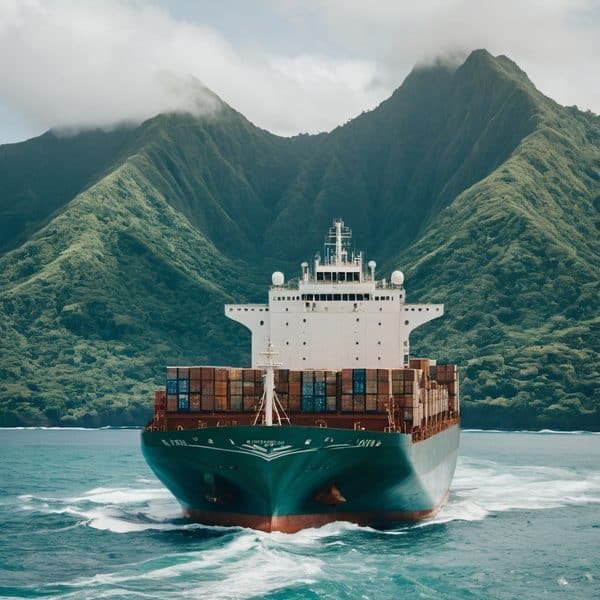
Pacific Island shipping — the lifeline for remote communities — is at a critical turning point as regional experts press for a near-term shift to wind-assisted propulsion to slash fuel use and shore up fragile supply chains.
“Shipping is for us as railways, canals and freeways are for developed countries,” Natasha Chan, assistant legal researcher at the Micronesian Centre for Sustainable Transport, told a recent regional forum on low-carbon maritime transport. Chan warned that Pacific fleets remain heavily dependent on imported fossil fuels and ageing vessels, leaving island nations exposed to rising fuel prices, long delivery times and growing climate risks.
Chan highlighted that the Pacific faces some of the highest maritime connectivity costs in the world, compounded by enormous distances between small, low-income communities and limited trade capacity. “Our domestic shipping services are often inadequate and substandard, except on the most profitable routes,” she said, describing a cycle in which weak investment and limited insurance capacity force operators to use old, donated or end-of-life vessels with poor maintenance regimes.
New research presented at the discussion suggests the region can capture significant fuel savings now using technologies that already exist. Chan cited studies indicating that fuel savings of at least 40 percent are achievable in Pacific operating conditions if mature technologies are applied correctly and supported by the right financing. She contrasted this with tests from the 1980s — when wind-assisted systems delivered about 30 percent fuel savings during an earlier fuel crisis — and said modern materials and designs could push the benefits further.
Experts at the forum reached a consensus that wind-assisted propulsion — from contemporary sails to other wind-capture systems — represents one of the most practical near-term pathways for reducing fuel consumption across the Pacific’s small- and medium-sized vessels. Chan argued that global advances such as hydrogen-powered ships and large-scale clean-fuel programs, while significant elsewhere, are often poorly matched to Pacific needs: “It is not a case of simply taking international market leaders and scaling them down,” she said, calling for investment in R&D tailored to local vessel sizes and operating patterns.
The push for wind solutions comes amid broader regional efforts to harden maritime governance and safety. Fiji and other Pacific governments have already been grappling with derelict vessels and reforms to insurance requirements, while the International Maritime Organization established a regional presence in Suva last year to coordinate technical support. Proponents of wind-assisted retrofits say immediate fuel-cost reductions would ease pressure on household budgets and national supply chains and complement longer-term decarbonisation strategies.
Chan urged development and climate finance institutions to design modalities that match the Pacific’s unique needs — smaller ships, sparse routes and constrained capital markets — so operators can access retrofits, maintenance support and appropriate insurance. If finance, tailored R&D and stronger maintenance systems are mobilised, experts say, wind-assisted propulsion could substantially lower costs, reduce emissions and strengthen the resilience of the Pacific’s essential shipping lifeline.
Leave a comment