
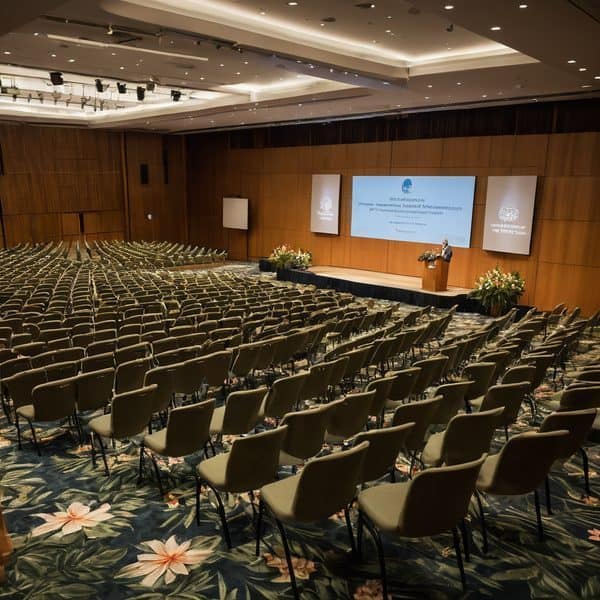
More than 6,000 delegates gathered at the Melbourne Convention and Exhibition Centre for Women Deliver 2026 this week heard a forceful call from Pacific campaigner Noelene Nabulivou for concrete accountability — not just rhetoric — as organisers roll out a proposed Melbourne Declaration aimed at turning conference commitments into action.
Nabulivou, executive director of DIVA for Equality and chair of the regional steering committee for the global gathering, told a packed hall that the declaration is designed to be more than a statement of intent. “This declaration is about saying — sign on. Be part of this,” she said, urging governments, civil society, technical institutions and development partners to declare publicly what they will actually do to deliver gender justice and human rights. Women Deliver 2026 is the forum’s first time being held in Australia and brings together governments, grassroots activists, multilateral agencies and youth leaders with a strong emphasis on intersectionality and locally led solutions.
Organisers are deliberately seeking a broad coalition of sign-ons — not only from states but from civil society groups, research institutions and other sectoral actors — because, Nabulivou argues, legitimacy and momentum will come from collective backing. The Melbourne Declaration, she said, builds on existing legal and human rights frameworks but goes a step further by asking endorsers to demonstrate tangible actions, timelines and outcomes rather than rely on past signatures to international instruments.
Central to Nabulivou’s pitch is addressing what she described as an “accountability gap” between promises made at international forums and delivery on the ground — a problem she says is particularly pronounced across Pacific island states. “Our governments sign on to so many international norms and standards,” she said. “But we want to make sure that it really means something. Not what you’ve signed, but what you’ve delivered.” To bridge that gap, she advocated for layered accountability systems that operate from local communities through national institutions to regional and global mechanisms.
Nabulivou highlighted the role that regional frameworks and bodies — including coordination through mechanisms such as the Pacific Islands Forum Secretariat — can play in ensuring Pacific priorities are aligned and tracked, but warned that frameworks alone are insufficient without political will and follow-through. She also stressed the importance of Pacific representation at global fora to ensure issues affecting women and girls in the region are prioritised rather than sidelined by distance or limited visibility in centres such as New York, Geneva or Bonn.
The Melbourne Declaration’s success, according to Nabulivou, will be measured by how many organisations and institutions publicly commit to concrete steps and by whether those commitments are then monitored and reported on. With more than 6,000 delegates at Women Deliver 2026, organisers hope the scale of the conference will translate into a broad base of signatories and the pressure needed to convert words into measurable progress on gender justice across the Pacific and beyond.