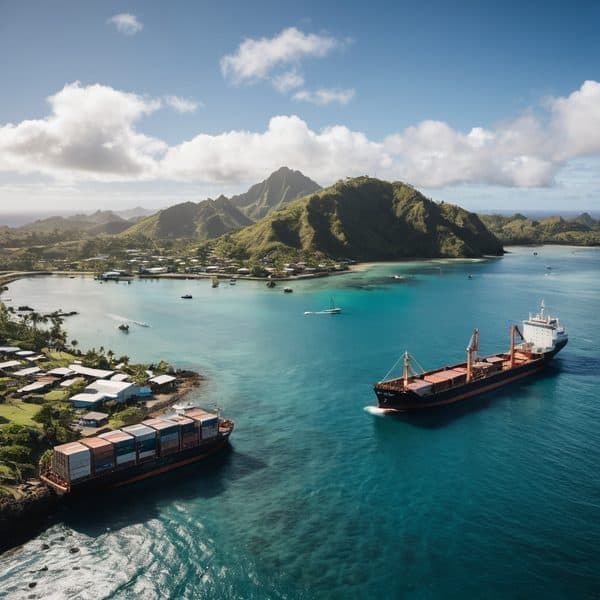
Pacific Island nations are confronting a wave of fresh challenges and policy moves this week as leaders and experts warn of a fragile regional lifeline while pressing for rapid climate and resilience action. New calls to modernise shipping, fresh political and legal warnings, an acute hospital emergency in the Solomon Islands and a series of regional initiatives underline mounting pressure on island states to boost logistics, health and governance defences.
At the centre of the unfolding story is the region’s maritime lifeline. Natasha Chan, assistant legal researcher at the Micronesian Centre for Sustainable Transport, told a regional forum that the Pacific’s domestic shipping network is in crisis — aging vessels, high operating costs and heavy dependence on imported fossil fuels have left many communities exposed to supply shocks. Chan said fuel savings of “at least 40 percent” are achievable with existing technologies if adapted to Pacific conditions and urged investment in wind-assisted propulsion as one of the most practical near-term fixes. She noted wind systems tested during the 1980s delivered around 30 percent savings then and argued modern materials and designs could improve outcomes, provided development and climate finance are mobilised at the right scale.
That technical push dovetails with political moves across the region. Fiji’s Climate Change Minister has outlined new priority areas intended to accelerate Pacific climate action — an agenda that officials say will need to include transport decarbonisation, stronger early warning systems and tailored finance for island-specific technologies. The minister’s priorities are the latest sign that governments see maritime reform as integral to climate resilience, building on last year’s steps such as the International Maritime Organization’s regional presence in Suva and Fiji’s own efforts to tighten vessel regulations.
Security and governance issues also surfaced this week. Timor-Leste President José Ramos-Horta warned his country is vulnerable to “infiltration by foreign organised crime,” a caution that regional partners say underscores risks to fragile supply chains and regulatory systems. In Fiji, the Chief Justice publicly labelled retirement rules “discriminatory,” adding a new legal and political dimension to debates over public sector reform. Separately, a politically connected crypto project was reported to be pursuing a resort development linked to figures alleged to be part of a scam syndicate, raising fresh questions about investment vetting in the Pacific.
Immediate humanitarian and health developments are pressing. Gizo hospital in the Solomon Islands has declared a state of emergency, underscoring persistent gaps in rural health capacity. Papua New Guinea’s Health Minister Kapavore publicly hailed a visit by a Chinese medical ship, reflecting the continued role of foreign medical diplomacy in filling short-term service gaps. Meanwhile the University of the South Pacific has announced it will double student support amid a global crisis, a move that regional educators say is vital to keep Pacific students enrolled and resilient during shocks.
Other developments this week include Vanuatu Prime Minister Ishmael Napat’s launch of Emua Vila, the country’s first economic micro-hub intended to stimulate local trade; confirmation that the World Council of Churches general secretary will attend an upcoming Pacific Church Leaders’ Meeting in Fiji; and the Weather Ready Pacific initiative’s latest efforts to strengthen early warning systems for island communities. Worker groups in Fiji have also voiced alarm after proposals to raise fuel prices, with an activist named Anthony warning those increases would severely impact already-stretched households and transport operators.
Taken together, the new developments illustrate a region grappling simultaneously with the logistical realities of delivering everyday goods, the need for tailored climate and transport solutions, and heightened concerns about governance and health capacity. Experts argue the window to invest in practical, Pacific-scale decarbonisation — particularly wind-assisted shipping technologies — is open now, and that failure to act risks deeper isolation and economic pain for remote communities.
Leave a comment