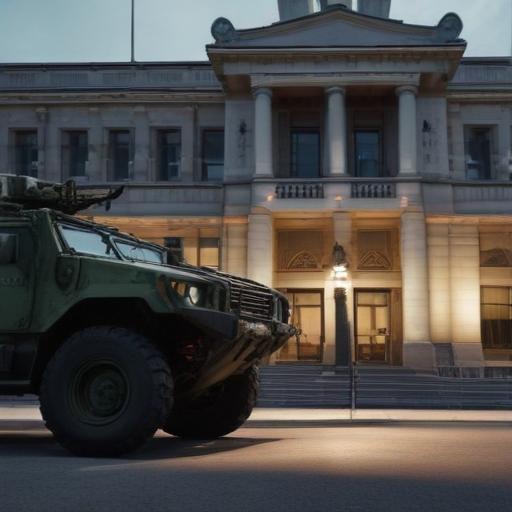
Hundreds of National Guard soldiers in uniform and combat boots spent Thursday along Washington’s National Mall, blending in with tourists, selfies, and ice cream from food trucks as part of a broad security push in the capital. Officials say the operation pools almost 2,000 troops, including about 1,200 from six Republican-led states, under a federal effort to curb crime in the city.
During the daytime, the guardsmen appeared unarmed, though the Pentagon indicated that service-issued weapons would soon be part of the mission. That shift in posture comes as the broader security drive—supported by federal agencies and local police—continues to unfold across Washington, D.C.
Mayor Muriel Bowser has brushed back characterizations that the deployment is solely about crime, and she voiced concern about the presence of an armed militia in the nation’s capital. On the ground, some West Virginia National Guard members were seen outside the National Museum of African American History and Culture, far from Washington’s crime hotspots, illustrating the mixed geography of the operation.
The effort is framed by the Trump administration as a crackdown on a crime surge, yet crime statistics in many areas have shown declines in recent years. Critics argue the display of troops and federal resources in a high-profile urban setting risks politicizing public safety and heightening tensions between federal and local authorities.
The Joint Task Force for the District of Columbia said troop deployment locations are driven by requests from city and federal law enforcement agencies. Abigail Jackson, a White House spokesperson, said teams of federal officers are conducting arrests in Washington’s highest-crime areas every night, as part of a broader surge that includes the FBI and other federal partners.
Residents in Ward 8—the city’s southeast neighborhood with a historically high crime rate—said they rarely see guardsmen on their streets but welcomed the added security in principle. The contrast between central Washington’s show of force and neighborhoods needing more resources highlights a perennial debate about where federal power ends and local control begins in policing.
Observers note that this is part of a larger national conversation about the role of federal forces in domestic security, civil liberties, and how best to balance safety with due process. In Washington, the security posture has already prompted questions about transparency, oversight, and the measured impact on long-term community trust.
What to watch next includes a White House briefing on the rationale for federal support in the capital, potential updates on the scope of the mission, and how local officials plan to coordinate with federal personnel. The coming days are likely to reveal whether the security presence calms tensions, reassures residents, or underscores ongoing disagreements over the proper role of federal forces in city policing.
Summary: Washington, D.C., is hosting a sizable federal security operation with thousands of National Guard troops intertwined with the city’s daily life, drawing both official support and local skepticism as officials navigate the balance between safety, civil liberties, and local governance. A continuing tension between federal action and local autonomy will shape the story in the days ahead, as authorities outline next steps and communities assess the impact on daily life and trust in public safety. A hopeful note is that the effort could be paired with clear governance and humane, rights-respecting practices that protect both safety and due process.
Leave a comment