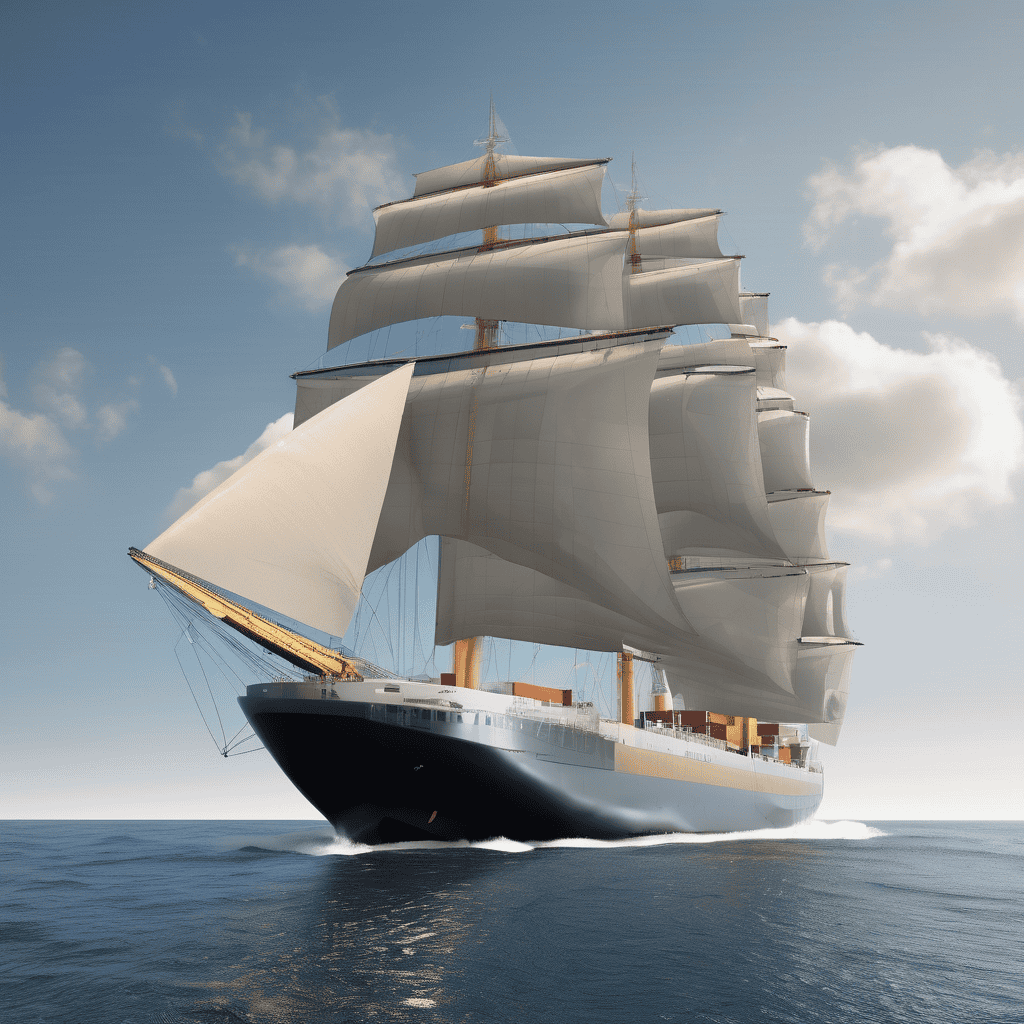
South Korea’s HD Korea Shipbuilding and Offshore Engineering, alongside Hyundai Merchant Marine (HMM), is embarking on a groundbreaking initiative to test the country’s first domestically developed wing sail designed for wind-assisted propulsion. As part of its commitment to enhancing green ship designs and technologies, the shipbuilder has recently fitted the wing sail onto the product tanker Oriental Aquamarine, which has a deadweight tonnage of 50,000 tons.
The Oriental Aquamarine, measuring 183 meters (600 feet) in length, was constructed in 2020 and has belonged to HMM since 2023. Over the next two years, HMM plans to evaluate the wing sail’s performance using real operational data, with intentions to potentially implement the technology across its entire bulk fleet based on the results.
The innovative wing sail technology is particularly advantageous for vessels that do not carry deck cargo, such as bulk carriers and tankers. HMM anticipates that this technology could yield fuel savings ranging from 5 to 20 percent through the utilization of wind-assisted propulsion.
In 2021, HD KSOE received an Approval in Principle from DNV while developing the wing sail concept. The design has successfully undergone structural safety assessments and basic performance verifications through preliminary onshore demonstrations. The version currently installed on the Oriental Aquamarine stands 30 meters (98 feet) tall and spans 10 meters (33 feet) in width. It incorporates auxiliary wings on either side to optimize efficiency and features a tilting mechanism to fold the sails during adverse weather or enhance air draft.
Recent sea trials have confirmed the system’s operational capabilities, ensuring compliance through inspections by the Korean Register. The data collected from this demonstration will be meticulously analyzed to gain insights into the wing sail’s performance in a real maritime environment, ultimately aiding in the development of commercial applications for the technology.
Industry analysts predict a continuous rise in wind-assisted propulsion adoption, noting its relatively low capital investment and the incremental savings on fuel and emissions. Current trends indicate that installations are doubling each year, with projections nearing 100 large vessels equipped with this technology by the end of the year. This advancement signifies a positive shift toward sustainable maritime operations, reflecting growing efforts in the shipping industry to embrace eco-friendly initiatives.
Leave a comment