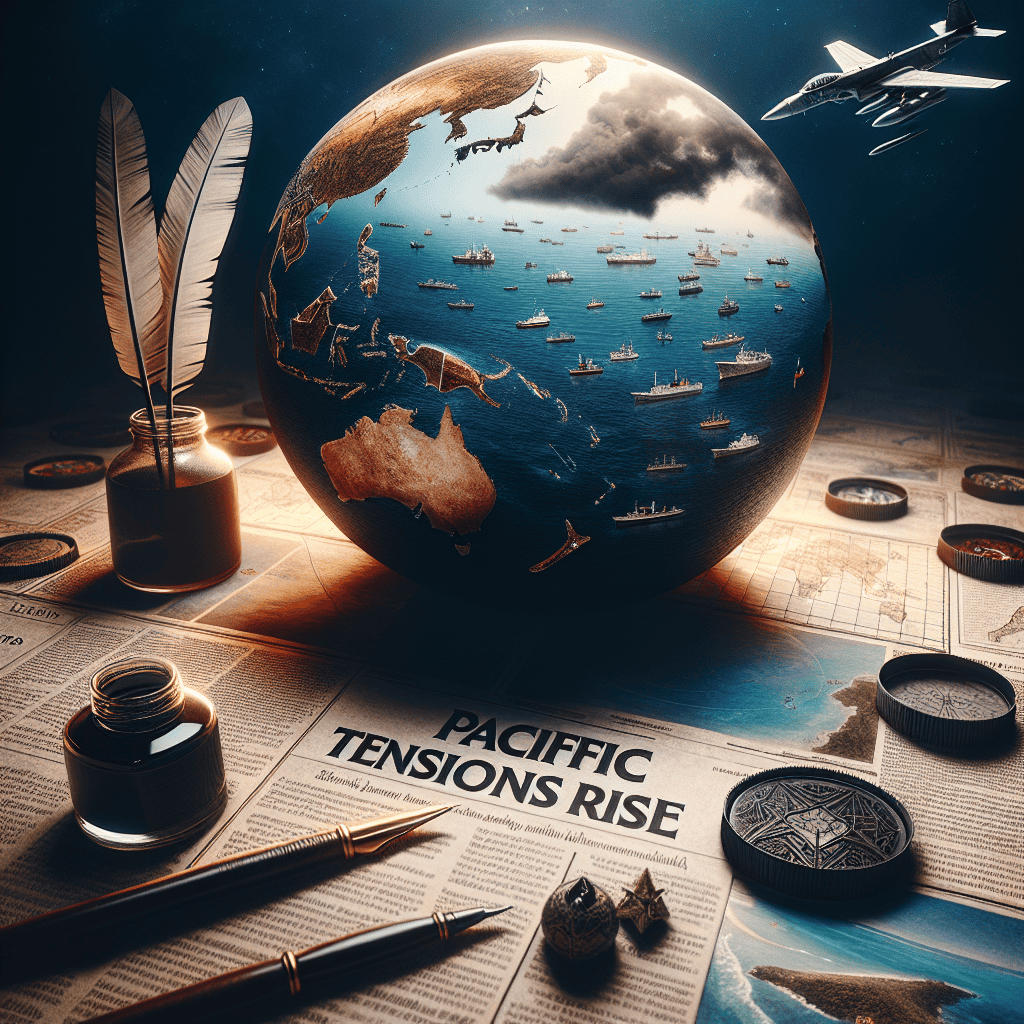
Prime Minister Sitiveni Rabuka has issued a warning regarding the potential for the Pacific region to become a battleground for international power struggles. During a press conference held in Canberra, Australia, he expressed concerns over the increasing tensions between global powers and emphasized the importance of Fiji and its neighbors maintaining a neutral stance.
Rabuka articulated, “We are trying to achieve an independent status of being friends with all and enemies to none.” He acknowledged the challenges this approach entails but reassured that it is achievable with mutual support among Pacific nations. The Prime Minister underscored Fiji’s commitment to nurturing strong partnerships with Australia, New Zealand, and the United States, while simultaneously pursuing development cooperation with China. He stated, “China’s participation in our development should not affect how we interact with Australia, New Zealand, and America.”
His remarks come in the context of heightened strategic interest in the Pacific, as various global powers vie for influence in the region. Rabuka highlighted the collective aspiration of Pacific leaders to adopt policies that foster cooperation rather than division, asserting that neutrality is key to regional diplomacy.
This perspective aligns with previous discussions among Pacific leaders about creating a “Zone of Peace” in the South Pacific, which highlights the principles of non-aggression and peaceful coexistence. Rabuka’s vision aims to unite Pacific Island countries against external pressures and foreign agendas.
The emphasis on fostering partnerships without sacrificing existing relationships reflects a proactive approach to diplomacy in the face of complex geostrategic dynamics. As Fiji navigates these challenges, its commitment to collaboration and stability provides a hopeful outlook for a harmonious future in the Pacific region.
Overall, Rabuka’s balanced diplomacy seeks to strengthen Fiji’s sovereignty while promoting a unified stance against any external conflicts that may disrupt regional peace. The ongoing efforts to enhance dialogue among Pacific nations suggest a bright potential for cooperation and resilience amidst a changing global landscape.
Leave a comment