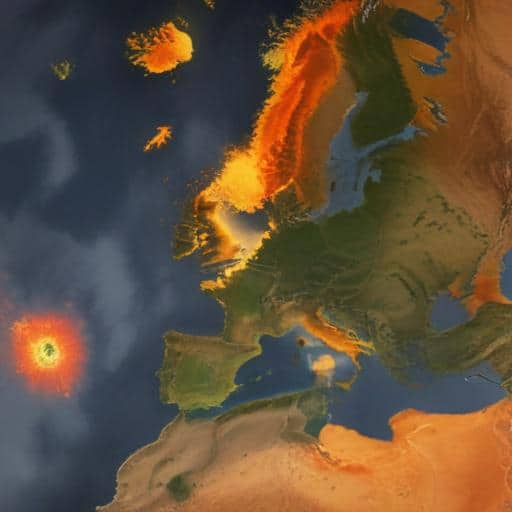
Firefighters across Spain, Portugal, Greece, Turkey and the Balkans were engaged in a broad battle against wildfires as a blistering heatwave pushed temperatures above 40 C in parts of Europe. Scientists say hotter, drier summers across the Mediterranean are becoming the new normal, fueling faster-spreading blazes year after year.
In Portugal, a mayor begged for relief as three fires burned across the country under fierce heat. Nearby in Spain, a fire on Madrid’s outskirts claimed the life of a man working at a horse stable and then threatened nearby homes and farms, though authorities later said it was contained.
Fatalities were reported elsewhere as well: a man died in a blaze in Albania, and a 61-year-old Hungarian seasonal worker is suspected to have died of heat-related causes while picking fruit in Lleida, Catalonia. In Montenegro, tragedy struck when a water tanker overturned in the mountainous Kuci area, killing one army soldier and injuring another.
Tarifa, at the southern tip of the Iberian Peninsula, saw scenes of chaos as beachgoers and visitors watched flames and thick smoke rise over hillside homes and villas. More than 2,000 people were evacuated as the fire—believed to have started in eucalyptus and pine forests—spread, with helicopters dropping seawater to slow the blaze.
Heat warnings were issued across Albania, Montenegro, Germany, Spain, Italy and France as temperatures surged. In Spain, temperatures reached as high as 44 C in some regions, with forecasts of little rainfall and windy conditions that would amplify fire risk.
Fire behavior experts caution that extreme heat, rugged terrain and shifting winds can generate dangerous fire whirls—spinning columns of flame that force firefighting teams to retreat. The broader pattern of multiple, simultaneous fires across Spain and neighboring countries aligns with the Mediterranean trend toward hotter, drier summers, a climate-change signal that is reshaping how authorities prepare for and respond to wildfires.
Summary: A regional heatwave is driving a surge in wildfires across southern Europe and the Balkans, causing evacuations and multiple fatalities while challenging firefighting efforts. Investigations are likely to probe causes of individual blazes, with authorities highlighting the importance of prevention as temperatures rise.
Hopeful note: Despite the damage, communities are pulling together, and firefighting services are coordinating across borders to protect people and property. The experience underscores the need for stronger prevention, rapid response capacity, and resilience-building to better shield landscapes and towns from future fire seasons driven by a changing climate.
Additional context for readers:
– Fire behavior such as fire whirls can occur in extreme heat and windy, confined valleys, complicating suppression efforts.
– Ground crews and local communities are increasingly relied upon when aerial support is limited by smoke or weather.
– The pattern of fires across multiple countries suggests a growing, cross-border resilience challenge that may require sustained investment and cooperation in prevention and climate adaptation.
Editor’s note:
This incident underscores how climate-driven heatwaves are reshaping wildfire risk across Europe. Readers should stay informed about local heat warnings, fire bans and evacuation advisories in affected regions. As authorities study the causes of individual fires, support for resilience measures—such as early warning systems, fuel-reduction programs and community preparedness—will be crucial in reducing future losses.
Leave a comment