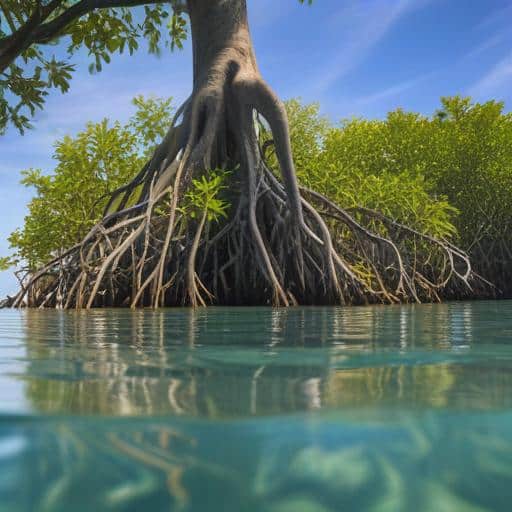
Communities in Guam and the Northern Mariana Islands are increasingly turning to their natural coastal ecosystems as a means of combating the long-term threats posed by climate change, such as rising sea levels and coastal erosion. Instead of relying on traditional concrete structures, these islanders are looking to harness the power of local blue carbon ecosystems, which include mangroves, seagrass beds, and tidal marshes.
A recent regional webinar, “Blue Carbon Ecosystems and Nature-based Solutions,” attracted over 100 participants from across the Pacific and Asia, discussing the potential integration of these ecosystems into national climate strategies. Known for their ability to absorb carbon dioxide, blue carbon ecosystems provide additional benefits by protecting coastlines from flooding, supporting marine biodiversity, and sustaining local fisheries.
Juhi Bansal, a climate consultant who moderated the session, emphasized the urgency of scaling up blue carbon initiatives, recognizing that these ecosystems are vital for areas highly affected by climate change, particularly Guam and the CNMI. The region is home to more than half of the world’s mangrove forests—which cover approximately 7.5 million hectares—essentially supporting coastal resilience.
Despite their benefits, these ecosystems are under threat. According to Aneta Nikolova from the United Nations Economic and Social Commission for Asia and the Pacific (ESCAP), the region has experienced a loss of 616 megatons of mangrove carbon while restoring only about half that amount in recent years, alongside similar declines in coral reefs and seagrass beds.
Guam’s long-term climate resilience plan includes strategies that leverage these ecosystems. The Guam Green Growth Initiative, managed by the University of Guam’s Centre for Island Sustainability, is training residents through the GROW Corps to engage in environmental restoration efforts, including protecting watersheds and replanting native species.
In the CNMI, local agencies have been closely monitoring changes in coral and seagrass habitats. Recent surveys indicate that while some areas are recovering, others are declining due to various pressures. One study recommends increasing seagrass monitoring and exploring natural solutions to bolster climate adaptation.
The webinar also introduced a four-part framework for ocean-based climate action, focusing on protecting blue carbon ecosystems, decarbonizing shipping, promoting ocean-based energy, and enhancing ocean resilience. Manuel Castillo from ESCAP pointed out that while there is political will for these initiatives, they must be backed by actionable measures, as many marine protected areas still lack effective enforcement.
Regional collaboration appears to be a hopeful avenue for progress, as territories like Guam and the CNMI can align their efforts with global frameworks, including the Ramsar Convention and the Global Biodiversity Framework. These tools can help integrate coastal protections into broader climate goals.
Funding remains a significant hurdle, with the NDC Partnership estimating a need for $83 billion to support coastal ecosystems, but only a portion of that amount currently secured. Efforts are underway, including new planning guides released by the NDC Partnership and the Green Climate Fund, to help boost national and jurisdictional capacities for managing coastal ecosystems.
Successful examples from countries like Vietnam and Belize underline the potential of blue bonds to finance mangrove protection, with Indonesia actively integrating mangroves into its climate strategies.
In conclusion, while the challenges are steep, the movement towards recognizing the value of blue carbon ecosystems signals a hopeful trend where communities can take action to restore and protect their natural resources, ultimately ensuring their resilience against the impacts of climate change. By fostering collaborative efforts and innovative strategies, there is a bright prospect for a sustainable and resilient future for the communities in these vulnerable island regions.
Leave a comment