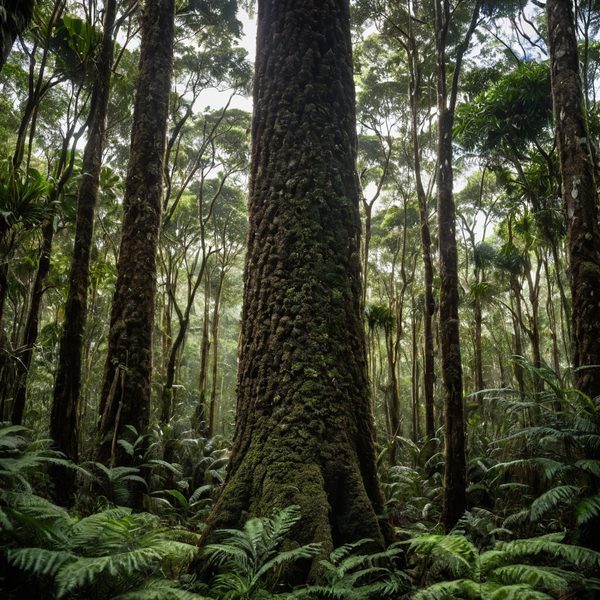
As Fiji National University marked Forests Day, FNU’s head of forestry Seleima Rakaucoka issued an urgent call for strengthened stewardship to protect the nation’s fragile ecosystems, highlighting the immediate threats from deforestation, unsustainable logging and invasive species. Speaking at the event, Ms Rakaucoka underscored the multiple roles forests play across Fiji — from regulating climate and protecting watersheds to supporting livelihoods and cultural practices — and warned that those functions are under mounting pressure.
“Forests support biodiversity, regulate climate, protect watersheds and soil, and provide resources such as timber, food, and medicine,” she said, stressing that these natural services are closely tied to economic and social well‑being. “They also sustain livelihoods and cultural practices, contributing significantly to both environmental stability and economic development in Fiji.” Rakaucoka pointed to the African Tulip among invasive species that have exacerbated ecosystem decline, and reminded stakeholders that trees also “absorb carbon, reduce soil erosion, protect water sources, and shield communities from floods and storms.”
In response to those pressures, FNU is positioning its forestry programme as a frontline response by training future environmental stewards in core scientific and technical skills. Rakaucoka said students are being taught ecology and GIS mapping to equip them for field research, monitoring and landscape planning. She framed that education as practical preparation for careers that will influence policy and management: “Graduates will serve as researchers, policymakers, educators, and environmental managers, driving innovative solutions for sustainable forest management.”
A notable strand of Rakaucoka’s message was the call to bridge traditional knowledge with modern science. She argued that customary land‑use practices contain long‑term insights into sustainable ecosystem management and that combining those practices with scientific approaches produces more effective conservation strategies. That integration, she suggested, should guide reforestation and community‑based conservation work across Fiji’s diverse island landscapes.
Rakaucoka also urged stronger participation from young people, encouraging them to engage directly in reforestation and local conservation initiatives. Her remarks framed conservation as a collective responsibility that extends beyond academic institutions to communities, policymakers and future leaders — a theme that aligns with recent national and regional sustainability efforts.
The university’s renewed emphasis on forestry and community engagement comes amid a broader push in Fiji toward sustainable development. Earlier this year, the European Union reaffirmed support for sustainable transformation in agriculture, and government and non‑government programmes have advanced community recycling and wetlands protection initiatives. Rakaucoka framed FNU’s work as complementary to these efforts, saying that safeguarding forest resources remains essential “to building a resilient and sustainable future for the Pacific.”
As environmental observances continued through 2026, FNU’s statements signal a sharpened focus on producing technical expertise and culturally grounded approaches to conservation. The university is presenting its forestry graduates not only as scientists and managers, but as agents of policy and education who can translate field knowledge into long‑term protection for Fiji’s forests and the communities that depend on them.
Leave a comment