
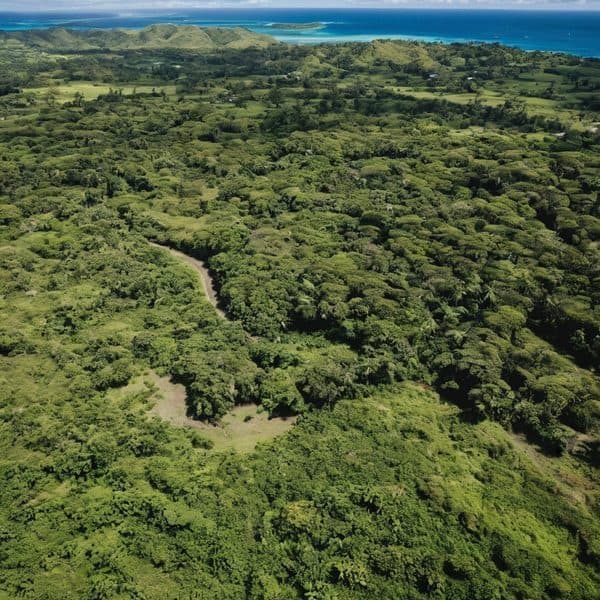
The Next Generation (TNG) Fiji’s proposed waste-to-energy plant at Naikorokoro Point in Vuda, Lautoka — a project already stirring strong public debate — has moved into a formal scrutiny phase after the submission of a 1,500‑page Environment Impact Assessment (EIA). The Environment Department’s Technical Review Committee will now assess the document alongside 875 public submissions and petitions carrying more than 8,800 signatures opposing the plan, underscoring how polarising the proposal has become.
Developers led by Fiji‑born Lyndhurst Group’s Robert Cromb and Australian landfill operator Ian Malouf say the proposed facility would cost about US$1.4 billion and generate roughly 80 megawatts of electricity. TNG’s consultation materials and presentations to communities argue the plant would cut landfill use, reduce greenhouse gas and methane emissions, bolster long‑term energy security and could be paired with a new port facility to enhance trade and economic activity.
Yet key details in the EIA and the project design have intensified opposition. TNG estimates the plant would require about 900,000 tonnes of feedstock annually, of which roughly 700,000 tonnes would be imported from Australia, New Zealand and neighbouring Pacific islands, according to the report. Opponents question why such a large proportion of waste would be brought into Fiji and warn of the logistics and nuisance of heavy truck movements — the proposal anticipates more than two dozen trucks daily delivering waste from across the country.
Community concerns were evident at an April 18 consultation in Viseisei Village, where villagers raised health fears over emissions. Viseisei resident Akili Masi asked about the potential impact on children’s health; in response, Mr Cromb acknowledged the risks posed by current open dump burning and said the project is motivated by a desire to address longer‑term waste fires and pollution. “If we don’t do something about it, they are going to have to live with 10 or 20 years of at least 200,000 tonnes of open waste dumps burning, leaking gases into the atmosphere and that is going to be a bigger problem,” he said. “That is the only mad reason I am doing this.”
The tourism industry has emerged as a powerful critic. Tourism Minister Viliame Gavoka warned the Naikorokoro site conflicts with planned developments for the Vuda‑Saweni corridor, a zone he said is earmarked for significant tourism investment. Gavoka pointed to the sector’s economic weight — forecasting some $2.81 billion in tourism earnings by 2025 — and urged developers and government agencies to consider alternative locations so as not to jeopardise tourism projects. Former Opposition leader Mick Beddoes, who attended a consultation in Naikorokoro Point, has echoed similar reservations.
TNG’s submission and the large volume of public responses mean the EIA review is likely to be closely watched by both proponents and opponents. For supporters, the proposal promises a technological route away from recurring landfill fires and chronic waste management problems that have affected Lautoka in recent years. For opponents, the scale of imported waste, potential health and environmental impacts, and the project’s siting near culturally significant and tourism‑targeted coastline are central objections.
The Environment Department’s Technical Review Committee has begun its assessment; a government decision on whether the project can proceed — and under what conditions — is now the focus for developers, local communities and industry stakeholders.