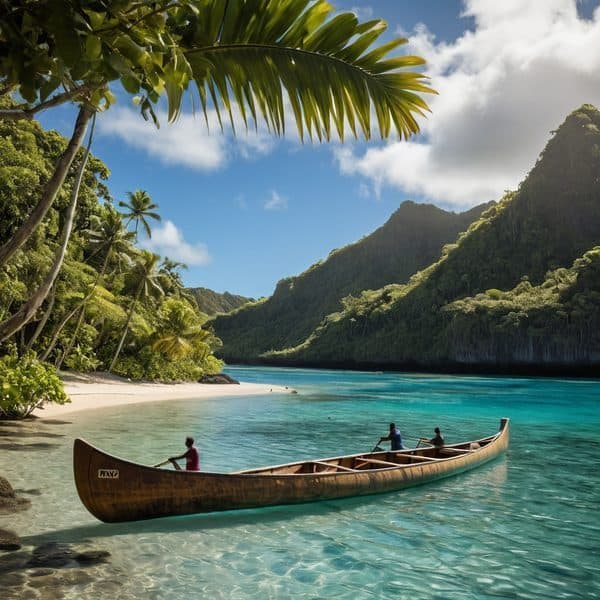
More than 1,400 people across Fiji will take part in a 50‑day training programme launched by the Anglican Church that combines indigenous knowledge, ocean theology and practical climate action aboard an ocean‑going canoe. The initiative, named Soko ni Nuinui (Voyage of Hope), will use the canoe Uto Ni Yalo as a floating classroom to bring theological reflection and hands‑on resilience training to coastal communities around the country.
Organisers say the programme will visit communities in Pacific Harbour, Sigatoka, Nadi, Lautoka, Ba, Savusavu, Labasa, Levuka and Suva, delivering training designed to build local leadership and catalyse community stewardship of the marine environment. Facilitators will employ a specialised train‑the‑trainer manual so that the hundreds of local leaders who attend can return home equipped to continue work in their villages and towns, multiplying the initiative’s impact beyond the initial sessions.
Soko ni Nuinui frames its work under the banner “We Are the Ocean,” emphasising a cultural and spiritual connection between Pacific peoples and the Moana that organisers say should inform collective responses to climate change. The programme blends Christian faith teachings with customary practices and scientific ideas to tackle practical problems such as coastal erosion, resource management and community preparedness for sea‑level rise and extreme weather.
The Anglican Church describes the Voyage of Hope as both a formation exercise for community leaders and a pilot for a wider network of stewardship across the Pacific. By training local facilitators rather than delivering one‑off workshops, the programme aims to create a sustained network for resource sharing, mutual support and trans‑national resilience among faith communities and customary custodians of coastal areas.
Organisers highlight the dual emphasis on spiritual reflection and hands‑on action: sessions on ocean theology and indigenous wisdom will sit alongside training in coastal protection measures, community organising and adaptation planning. The train‑the‑trainer manual is intended to standardise the curriculum while allowing for local adaptation so that teachings can reflect distinct cultural contexts and environmental priorities in each community visited.
The launch of Soko ni Nuinui adds to a growing body of faith‑based responses to climate threats in the Pacific, where rising seas and increasing storm intensity put livelihoods and cultural sites at risk. By positioning climate stewardship as both a moral and practical duty, the Anglican Church’s canoe programme seeks to mobilise congregations and customary leaders as frontline actors in community resilience and marine care.
Leave a comment