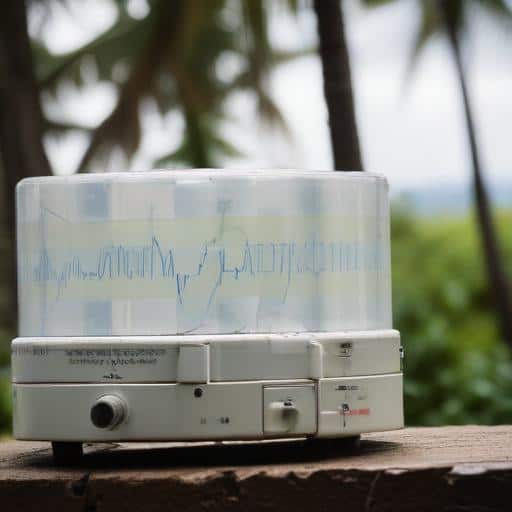
Fiji has recently reported a notable increase in seismic activity throughout February, registering a total of 262 earthquakes. The Seismology Unit of the Mineral Resources Department indicated that these earthquakes ranged in magnitude from a low of 1.7 to a maximum of 5.5. The northern region, particularly around Vanua Levu, experienced a significant number of shallow earthquakes, with tremors extending from the northern Yasawas to Cikobia Island, aligning with the geological features of the Fiji Fracture Zone.
Furthermore, minor earthquake activities were observed in Viti Levu, pointing towards stress on shallow crustal faults. Deep seismic events, which occurred at depths of 300 to 600 kilometers, were primarily located east of Fiji, beneath the Lau Basin. These deep events are indicative of the subduction processes involved as the Pacific Plate descends beneath the Indo-Australian Plate.
This recent spike in seismic activity serves as a reminder of Fiji’s geological volatility, being situated within the Pacific Ring of Fire, recognized for its frequent earthquakes and volcanic activity. Previous analyses have shown similar patterns of increased seismic occurrences in the region, underscoring the importance of community preparedness measures that have been put in place by local authorities to ensure public safety.
Residents are advised to remain alert and prepared for additional seismic events. The ongoing education about earthquake safety in communities not only enhances their resilience but also mitigates risks associated with the challenges of living in such an active seismic area. This proactive preparedness fosters hope and confidence that, with appropriate knowledge and readiness, communities can effectively navigate the challenges posed by their dynamic environment.
Leave a comment