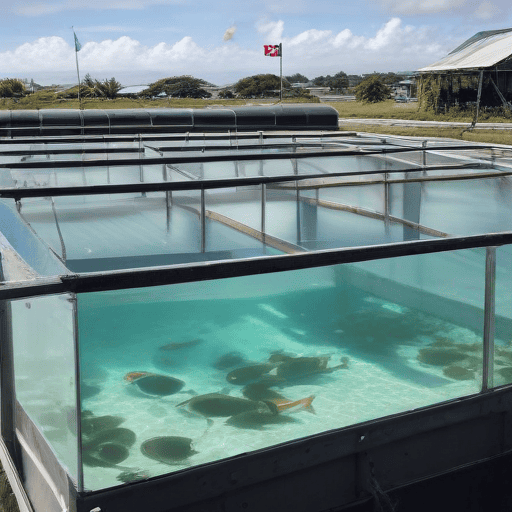
Parliament has successfully enacted the Aquaculture Bill 2024, which establishes a comprehensive framework to regulate and support Fiji’s aquaculture industry in a sustainable and biologically responsible manner. Minister for Fisheries and Forestry, Alitia Bainivalu, emphasized the importance of this legislation during her recent speech in Parliament.
Bainivalu remarked that the new Act presents a robust framework that not only regulates but also fosters the growth of Fiji’s aquaculture sector. This initiative is designed to promote sustainability and biosecurity, along with responsible management of resources.
One key aspect of the Aquaculture Act is the establishment of designated aquaculture zones for both marine and freshwater activities, permitting these operations to be carried out sustainably while safeguarding the environment. Bainivalu pointed out that this strategy will help protect Fiji’s distinct ecosystems while simultaneously driving economic growth in local communities.
Furthermore, Bainivalu highlighted the rising global demand for seafood and the role of aquaculture as a sustainable solution to meet this need, alleviating pressure on wild fish populations. The Act categorizes licenses into three types—commercial, semi-commercial, and subsistence/food security—ensuring that aquaculture businesses are properly registered, monitored, and compliant with biosecurity standards.
This regulatory framework will confer legal recognition on aquaculture enterprises, enabling them to access financial resources such as loans and grants, which will promote innovation and growth within the sector. Bainivalu also emphasized the empowerment of land-owning units and communities to leverage their lands for aquaculture, especially in regions facing saltwater intrusion, where traditional agriculture may no longer be feasible.
The government is reportedly investing significantly in aquaculture initiatives every year, covering various projects such as pearl farming, seaweed cultivation, and the enhancement of aquaculture hatcheries. Bainivalu asserted the government’s unwavering commitment to the sector, while also noting that for these investments to reach their full potential, an effective and enforceable legal framework focused on sustainability and biosecurity is vital.
This legislative move reflects a progressive step toward enhancing Fiji’s aquaculture industry and ensuring it contributes positively to both the economy and environmental conservation. It embodies a hopeful vision for sustainable food production and community empowerment within Fiji.
In summary, the Aquaculture Bill 2024 represents a pivotal development in not only supporting local economies but also in preserving Fiji’s unique ecological heritage, establishing a balance that promotes growth while safeguarding resources for future generations.
Leave a comment