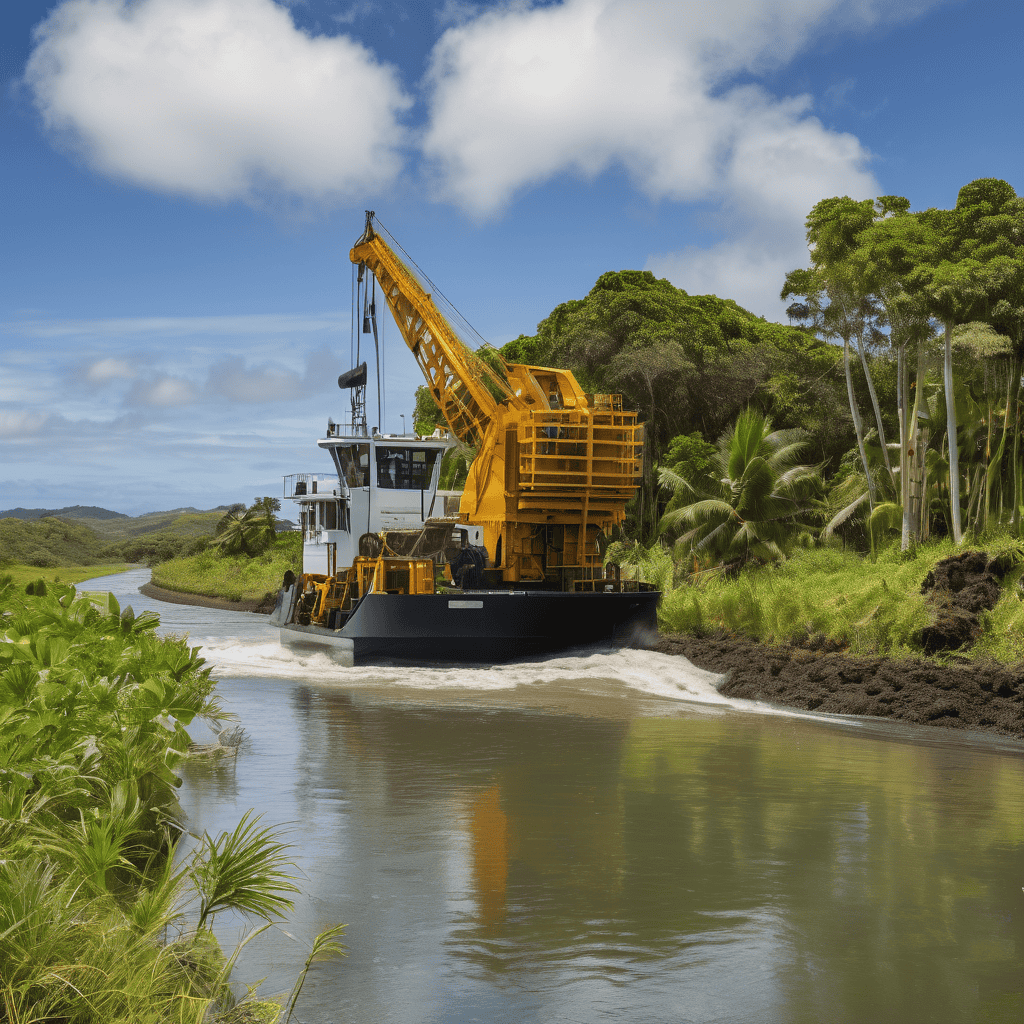
The introduction of a new dredger is set to enhance drainage in Fiji’s agricultural regions and mitigate flood risks. This initiative aligns with the government’s ambition to elevate agricultural exports beyond the $1 billion threshold.
Minister for Agriculture, Waterways, and Sugar Industry Tomasi Tunabuna shared insights with The Fiji Times, stating that the acquisition of the dredger enables the ministry to directly manage the maintenance of rivers and streams—a task that had faced delays for years due to the reliance on outsourced services. “For the last 10 to 15 years, we have been hiring service providers, and there have been delays because of the normal contracting procedures,” Mr. Tunabuna explained. With the new dredger and the ministry’s expertise, he believes that essential work can now be carried out more effectively.
Dredging is crucial for improving drainage during heavy rainfall, allowing excess water to flow more freely and thus reducing the risk of flooding in low-lying agricultural areas. The minister emphasized that the dredger will also facilitate reviews and enhancements of floodgate and drainage system designs, especially in regions vulnerable to saltwater intrusion. “This will benefit farming communities across the country, including areas dedicated to sugarcane and other crops,” he noted.
The cutter suction dredger was officially presented to the Ministry of Agriculture at the Luvuluvu Depot in Nausori last Friday. Minister Tunabuna also highlighted plans for long-term upkeep of the equipment, which include the recruitment and training of local technicians. This move aims to lessen dependence on outside services and ensure the dredger’s continued operation for many years.
By bolstering flood mitigation efforts, this new asset is expected to significantly protect the livelihoods of farmers and enhance food security across Fiji. The initiative demonstrates a commitment to sustainable agricultural practices and resilience against climate challenges, fostering hope for the future of the nation’s farming communities.
Leave a comment