
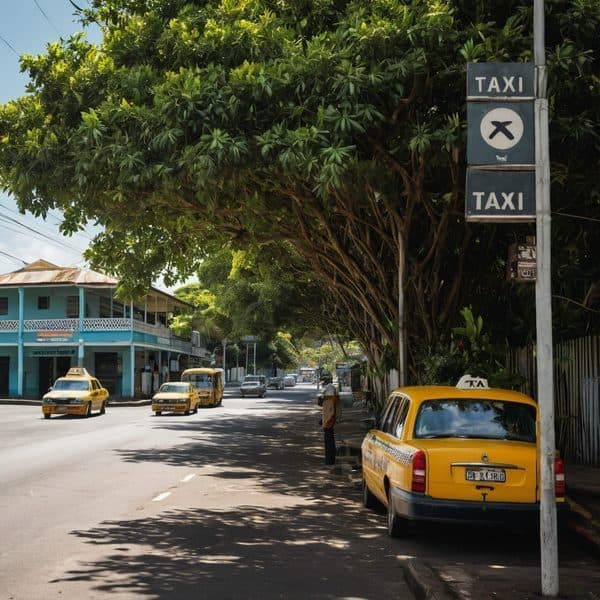
The Government is preparing new rules to regulate taxi base fees and has told operators no new base letters should be issued until the framework is finalised and formally gazetted, Transport Minister Ro Filipe Tuisawau told Parliament on Friday.
Tuisawau said the regulation is being drawn up to curb excessive charges by base owners and to provide a clear, fair system for allocating bases and stands. “The management or the regulation of base fees is currently being formulated. So, no one should be issuing base letters now, because the base needs to be gazetted… before they can issue base letters,” he told MPs, warning against arbitrary pricing that could undermine drivers’ incomes. He gave the example of fees in the order of $10,000 a year as “really exorbitant.”
The minister said officials are developing a formula to set reasonable base fees tied to the average income a taxi can earn, although he did not provide the precise mechanics or timeline for finalisation. “There is a formula there, which ends up with a reasonable amount in terms of the average income that a taxi can earn,” Tuisawau said, indicating the government intends the fee-setting mechanism to reflect operators’ earning capacity rather than allowing market or owner-driven rates to prevail.
Tuisawau also acknowledged concerns from operators who have had difficulty securing base letters under the current allocation framework. He reminded the sector that existing law provides a transition period: all taxi operators must secure an approved base or stand within their designated area by September 30, 2027. In the meantime, the Ministry of Transport and the Land Transport Authority are urging drivers and owners to engage early with municipal or local governments and private base providers to secure approved arrangements rather than waiting until the deadline.
By suspending the issuance of base letters until the framework is gazetted, the government aims to avoid a patchwork of approvals under inconsistent rules and to prevent bases being issued under terms that could later be revised. That pause could create short-term uncertainty for operators seeking formal approval, but the ministry is stressing that the transitional provisions remain in force and that early engagement with councils and base providers will help drivers meet the 2027 deadline.
The announcement is the latest move by the ministry to tidy up regulation of the urban taxi sector, which has long relied on a mix of municipal allocations and private base arrangements. While Tuisawau did not specify when the new fee regulation would be published in the Gazette, the minister’s comments signal a focus on protecting drivers’ incomes and creating a transparent, administrable system for base allocation and charges.
Operators and base owners will be watching for the forthcoming gazetted framework and the detailed formula for fee-setting, which will determine how much base owners may charge and the degree of municipal oversight. For now, the ministry and the Land Transport Authority are urging stakeholders to start talks with relevant local authorities to avoid last-minute compliance problems as the 2027 transition date approaches.