
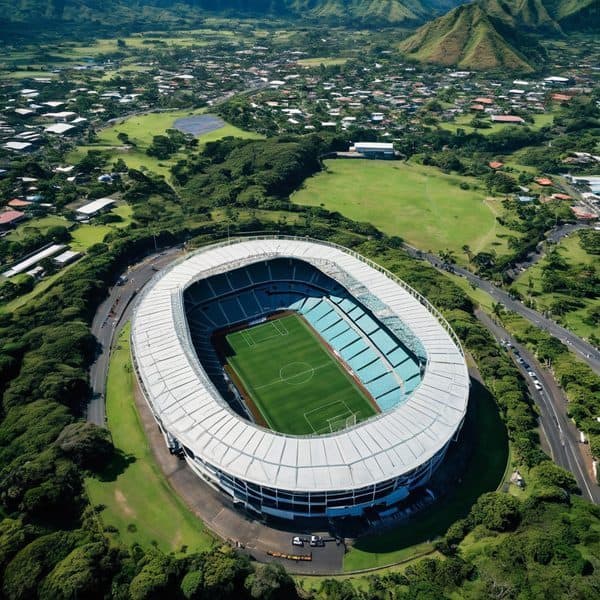
More than $29.5 million has been collected from fees, fines and levies across Fiji Sports Council facilities over the past five years, Prime Minister Sitiveni Rabuka told Parliament, providing the most detailed public breakdown of sports-facility revenue to date. Rabuka said the figures, supplied in response to a written question, show a marked recovery in collections since 2022–2023.
Rabuka outlined annual revenue as follows: 2020–2021: $4.64 million; 2021–2022: $4.55 million; 2022–2023: $7.10 million; 2023–2024: $6.24 million; and 2024–2025: $7.03 million — a total of roughly $29.56 million. “These figures demonstrate a strong recovery and upward trend in revenue collection, particularly from 2022–2023 onwards,” he said in Parliament.
The Prime Minister attributed the increase not only to higher utilisation of sporting venues but also to improvements in financial governance at the council. “This improvement is not solely a reflection of increased utilisation, but also the result of enhanced financial governance, including strengthened revenue collection systems and improved management of arrears,” Rabuka said, signalling internal administrative reforms as a driver of stronger returns.
Despite the rising revenue, Rabuka confirmed there have been no increases to fees charged for access to Fiji Sports Council facilities during the five-year period. He framed the decision to freeze charges as a deliberate policy to keep sport affordable: “There have been no increases or revisions to the fees and charges for sports facilities under the Fiji Sports Council over the past five years,” he said, adding that the approach aims to preserve access for grassroots communities, youth groups and sporting organisations.
The figures and Rabuka’s comments mark the latest development in scrutiny of how public sports assets are managed and financed. By releasing the revenue breakdown to Parliament, the government has provided a clearer picture of income streams that fund upkeep and operations of national sporting venues. Rabuka also said continued investment will be directed towards maintenance and upgrades to ensure facilities “remain safe, accessible and fit for purpose” and align with national development priorities.
While the government emphasised affordability and governance improvements, the disclosure raises questions for sporting bodies and community users about how the increased revenue will be allocated across maintenance, programming and future capital works. The Fiji Sports Council will likely face closer public and parliamentary attention as stakeholders seek details on specific upgrade plans and how the council will sustain both access and standards amid rising utilisation.