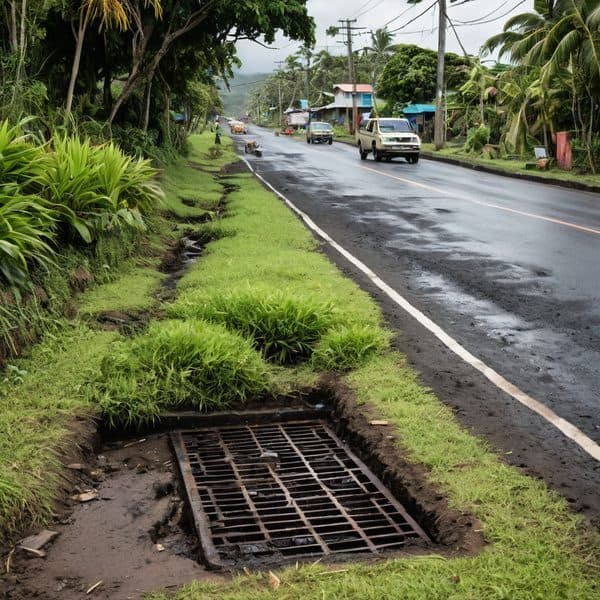
The Government has moved to return a range of municipal services to local councils in a bid to boost accountability and improve on-the-ground service delivery, Minister for Local Government and Housing Maciu Nalumisa has confirmed. Cabinet is considering reforms that would shift responsibilities such as drain, footpath and streetlight maintenance back from the Fiji Roads Authority to the municipalities themselves.
“When this is brought back to the municipalities, the council will take responsibility and ownership, to the clearing of drains, come heavy downpour, we won’t be having blocked drains around our municipalities,” Nalumisa said, outlining the rationale for the realignment. He said councils were better placed to respond quickly to residents’ concerns, noting that citizens tend to lodge complaints directly with councils rather than with a central agency.
Nalumisa told journalists the change is part of broader efforts to make local government more responsive. “When rate payers complain, they come to the council and complain; these are some of the reforms that we are doing right now,” he said. The minister framed the move as one that would bring clearer lines of accountability and faster resolution of routine municipal problems such as overflowing drains, broken footpaths and faulty streetlights.
Acknowledging the limits on municipal budgets, Nalumisa conceded councils face financial pressures as they take on greater responsibilities. He said the central government is providing subsidies and that ratepayers currently shoulder the direct cost of rubbish collection. To bolster capacity at the local level, Nalumisa also revealed external assistance has been secured: the Japan International Cooperation Agency (JICA) is supporting the Ministry of Local Government and several councils by supplying equipment, including garbage compacted trucks.
The announcement comes amid ongoing public concern about waste management and other municipal services in Fiji — issues that community groups and recent commentary have described as pressing challenges for urban and peri-urban areas. Returning service delivery functions to councils is presented by the ministry as a way to reduce bureaucratic fragmentation and make service providers more locally accountable.
Details on the timetable for the transfers, how responsibilities will be formally re-assigned, or how recurring costs will be funded were not provided. Nalumisa said discussions are continuing through Cabinet. The success of the reforms is likely to hinge on the availability of equipment, maintenance funding and strengthened operational capacity at the municipal level — areas the government and JICA say they are beginning to address.
For now, the move signals a policy shift toward decentralising routine municipal work and a commitment from the ministry to have councils take a lead role in resolving the everyday service problems that affect residents’ quality of life.
Leave a comment