
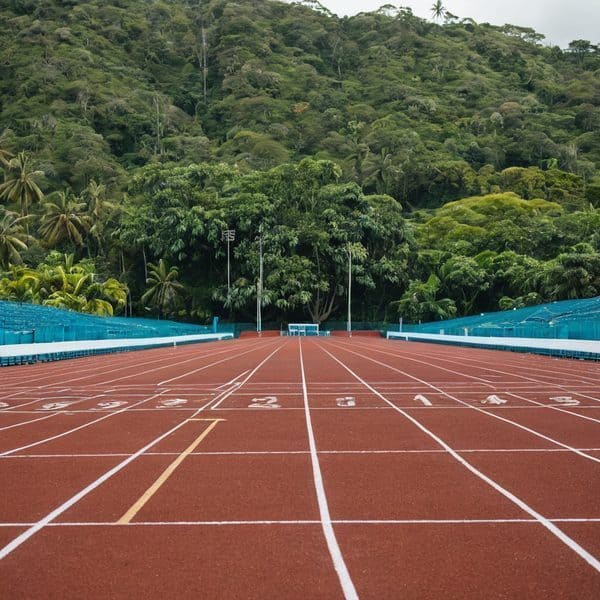
More than 2,500 student athletes from 155 schools are converging on the Laucala Bowl this week for the three‑day Fiji Secondary Schools Athletics Competition, contesting 150 events — a scale that underlines the depth of talent in school sport across the nation. As the meet moves into its final leg today, the spectacle on the track and field is undeniable; what remains less clear is what comes next for the young competitors once the medals are handed out and the crowds drift home.
This year’s meet features familiar rivalries and rising challengers. Marist Brothers High School enter as defending boys’ champions, with stiff competition from Queen Victoria School, Ratu Kadavulevu School of Tailevu, Suva Grammar School, Natabua High School of Lautoka and Xavier College of Ba. In the girls’ division Mahatma Gandhi Memorial High School chases a historic third consecutive title, while Adi Cakobau School, Suva Grammar, Jasper Williams High School, CMF College and Ratu Sukuna Memorial School all press their claims. These are not isolated schools but part of a long tradition: school athletics has been recorded locally since the 1960s, producing generations of competitors and hundreds of memorable performances.
That continuity makes the question posed by organisers and observers this week all the more urgent: do structured, attractive pathways exist to keep these athletes in the sport beyond school? The competition is arguably the biggest and most popular student athletics event in the region, yet Fiji’s pipeline from promising school athlete to sustained elite performer remains inconsistent. While other sports — notably rugby and increasingly football — offer clearer professional and commercial opportunities, athletics too should be treated as a career option for those with the talent and commitment.
Addressing that gap will require coordinated action from multiple stakeholders. Schools, Fiji Athletics, the Ministry of Youth and Sports, tertiary institutions and the private sector must map a pathway that links school meets to national junior programmes, regional competitions and scholarship opportunities. Investment in coaching, talent identification, sports science and athlete welfare — including education and career planning — would make staying in athletics a realistic choice rather than a hobby to be abandoned in favour of other income‑bearing sports.
Practical incentives could include scholarship schemes that bind secondary success to tertiary support, partnerships between schools and local clubs to maintain training continuity, targeted funding for promising juniors to compete overseas, and corporate sponsorship that rewards performance at both school and national level. Equally important is creating a visible ladder of aspiration: regular domestic fixtures, age‑group championships and clear selection criteria for national representation that keep young athletes engaged and motivated.
The event at Laucala Bowl is a reminder of what Fiji already has — numbers, commitment and competitive spirit. The final day will crown champions and settle rivalries, but the real measure of success should be whether the system turns this annual surge of talent into long‑term growth for athletics. If Fiji is serious about producing Commonwealth and Olympic calibre athletes from this breeding ground, now is the time to invest in the end of the journey as much as the thrilling starts on the track.