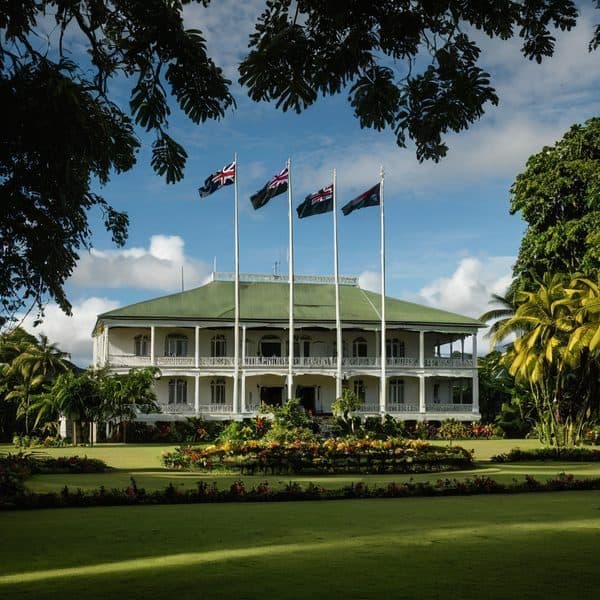
Fiji will next week begin formal mourning and farewell rituals for former President and Turaga nai Taukei Naisogolaca Ratu Epeli Nailatikau, with a traditional reguregu at Government House scheduled from Monday to Wednesday, followed by a state funeral church service on Friday at Albert Park in Suva. After the service his body will be flown to Bau Island for interment at the sautabu, the chiefly burial grounds of his clan.
Ratu Epeli, who died on March 26 at the age of 84, served as Fiji’s President from 2009 to 2015 and held the office of Speaker of the House of Representatives from 2001 to 2006 and again from 2012 to 2015. His public career also included stints as Commander of the Royal Fiji Military Forces, Minister of Foreign Affairs and Fiji’s High Commissioner to the United Kingdom, roles that placed him at the centre of both security and diplomatic affairs for decades.
Born into chiefly lines, Ratu Epeli was the great-great-grandson of Ratu Seru Epenisa Cakobau and the grandson of King George Tupou II of Tonga, connections that underscored his standing in Fiji’s traditional hierarchy. The decision to return his body to Bau for burial at the sautabu follows longstanding custom for chiefs of his rank and signals a full traditional send-off in his ancestral home.
Beyond his chiefly and constitutional roles, Ratu Epeli drew attention for his outspoken public health work. As a UNAIDS Goodwill Ambassador he cut through taboos to promote safe sex in rural communities and was a leading advocate for the HIV/AIDS Act of 2011. His approach often blended humour and bluntness to reach audiences who might otherwise ignore the message.
Former Attorney-General Graham Leung recalled one such tactic in a newspaper article, saying Ratu Epeli would sometimes surprise audiences at cocktail receptions by producing condoms to drive home the point about prevention. “Some observers may have felt that he was being frivolous, but behind the cheeky humour, he was conveying a serious message about the importance of safe sex,” Mr Leung said.
As the nation prepares to honour him with a state funeral, tributes are framing Ratu Epeli as a leader who balanced traditional authority and public service — described by supporters as someone who “proved that true power lies in servitude.” The coming week’s reguregu, public service and chiefly interment will be the latest and final formal acknowledgements of a long and varied public life.
Leave a comment