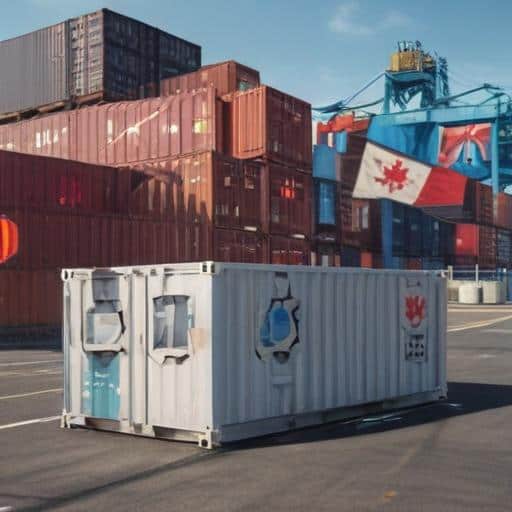
Fiji to roll out container x-ray scanning facilities to bolster border security and curb drug trafficking
Work has begun on expanding border defenses with container x-ray scanning facilities designed to screen all cargo and disrupt drug trafficking and other transnational crime. The rollout will be led by the Fiji Revenue and Customs Service (FRCS) in collaboration with border and law enforcement agencies, with support from the Australian Government funding and additional resources from Fiji.
Deputy Prime Minister and Finance Minister, Professor Biman Prasad, described the initiative as part of a broad push to tackle major national issues, including drug-related crime that fuels rising HIV cases. He highlighted Fiji’s position as a potential transshipment point for drug shipments to countries in the Pacific region, as well as to Australia and New Zealand. The facilities are expected to be operational in the coming months.
“We are working with the Australian Government, so there is funding that has also been provided by the Australian Government, and we are putting additional resources from our side as well to ensure that FRCS is well equipped to deal with border interception or any kind of, you know, ability of traffickers to trade drugs through our borders,” Prasad said.
Transport Minister Ro Filipe Tuisawau voiced full support for the project, noting that container x-ray scanning will enhance oversight of everything entering the country and help manage transport-related technical issues across the sector.
The FRCS-led initiative is part of Fiji’s ongoing effort to secure safer borders and protect the region from cross-border crime. The plan aligns with broader regional security objectives and complements earlier international cooperation in border protection.
Context from prior partnerships shows a continued emphasis on advanced detection capabilities. Previous collaborations have brought state-of-the-art drug detection equipment to Fiji, including devices such as First Defenders and TruNarc, provided through partnerships with the Japanese government and the United Nations Development Programme. Those tools have enabled real-time analysis of narcotics and hazardous substances at key entry points, including Suva Wharf, and have been cited as important milestones in strengthening Fiji’s border security and deterrence.
Summary
Fiji is expanding its border security toolkit with container x-ray scanning facilities, led by FRCS and funded in part by Australia, to screen all cargo and deter drug trafficking. The move builds on existing international partnerships and aims to protect public health and regional security, with operations anticipated within the coming months.
What this means for readers and communities
– Increased ability to detect and intercept illegal drugs at the point of entry.
– Strengthened border coordination among FRCS, police, and other agencies.
– A broader message of deterrence to traffickers and protection for families and communities.
Positive outlook
The combination of new container scanning technology and ongoing international support signals a proactive, multi-layered approach to drug crime and border security. If implemented effectively, this initiative could lead to safer communities, more stable regional security, and greater public confidence in Fiji’s ability to safeguard its borders.
Notes for editors (context and potential next steps)
– Training and maintenance will be critical to ensure the x-ray facilities operate effectively and stay up to date with evolving trafficking methods.
– Coordination with existing drug-detection programs and data-sharing across agencies will enhance overall impact.
– Monitoring and evaluation should track drug interception rates, turnaround times for cargo screening, and community health indicators related to drug crime.
Leave a comment