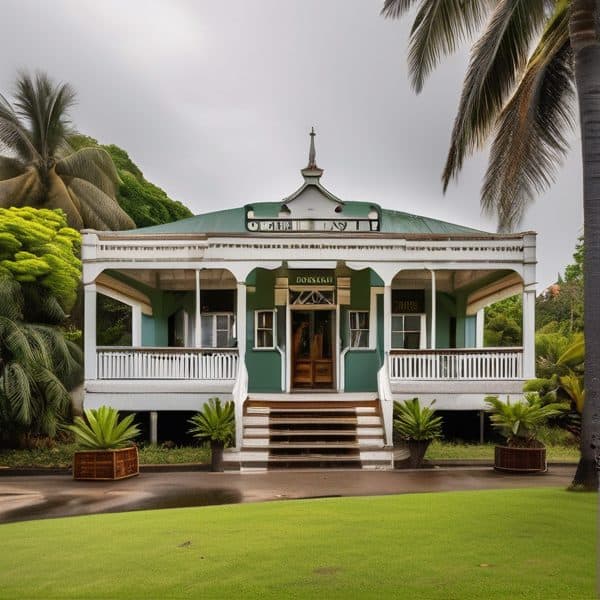
The Fiji Club marked its 151st anniversary earlier this month with a cake-cutting and garlanding ceremony in Suva, a milestone that club officials say underlines the institution’s enduring role as a social centre even as its membership has shrunk dramatically over recent decades. President Park Yuen was the principal guest at the celebrations, which also involved vice-president Neel Shivan, trustee Ross McDonald and club secretary-manager Vinita Abhimanyu.
For Ross McDonald, who estimates he has been a member for just over 50 years and serves as a trustee, the anniversary was less about pomp and more about the community the club continues to foster. “I think the most important aspect is that it’s a social centre for the community,” McDonald said, recalling decades of gatherings, business-house squash competitions and family weekends by the pool. “You meet people from all walks of life that you probably wouldn’t have met otherwise.”
The club’s history stretches back to 1875 when it was founded in Levuka, a year after Fiji was ceded to Britain. At that time Levuka was the capital and commercial hub, and the club provided a meeting place for colonial officials, merchants and visitors. Its fortunes were tied to the town: the club ceased operations after the capital moved to Suva in 1881, before being revived there by former members and prominent figures. In its early Suva years the Fiji Club was known for its elaborate furnishings and facilities — reading rooms with international newspapers, dining halls, parlours, guest rooms and spaces for discussion and social interaction.
Photographs from the anniversary, credited to Jona Konataci, show Park Yuen being garlanded and members gathered for dinner, with McDonald, Shivan and Yuen jointly officiating at the cake-cutting. The event also captured quieter moments of membership life, including trustee McDonald and long-standing members sharing reminiscences about the club’s past vibrancy.
But the anniversary also highlighted a sharp decline in membership. McDonald recalled a peak of about 700 to 750 members in earlier decades; he said current membership sits at roughly 280 to 300. He attributes the reduction to broader social changes — shifts in leisure habits, the professional landscape and how communities now gather — rather than any single cause. The drop in numbers underlines challenges facing many traditional social clubs trying to remain relevant in a different social era.
The 151st anniversary served both as a celebration and a reminder of the Fiji Club’s evolving identity: once a hub for colonial-era professionals and a bustling centre for sports and family activities, it now seeks to preserve its role as a place for fellowship amid fewer members. The recent ceremony and the presence of long-serving figures such as McDonald and the current leadership signalled a commitment to maintain the club’s social functions even as it adapts to changing times.
Leave a comment