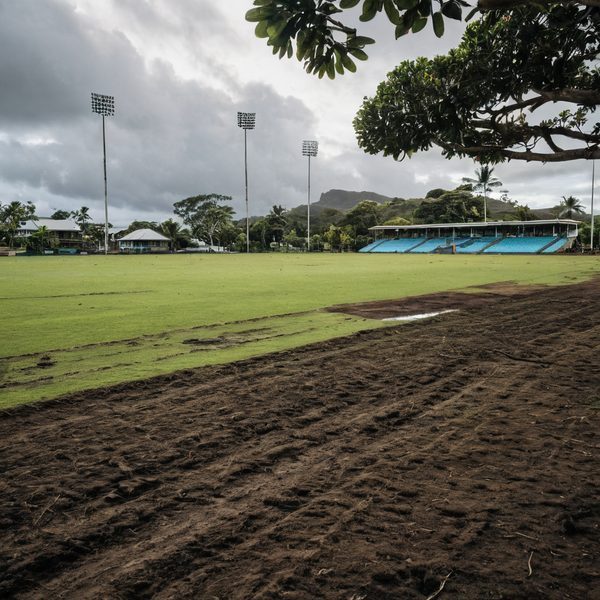
Fijian Drua coach Glen Jackson says his side will play “for the country” this weekend after Tropical Cyclone Vaianu disrupted preparations and left many fans in the western division dealing with storm damage. The Drua host Australian Super Rugby side Western Force at Churchill Park in Lautoka on Saturday, and Jackson believes a strong home turnout would give the team an extra lift as communities recover.
“This has been a difficult week for the Fijian Drua and its fans,” Jackson said, urging players to “put some pride into the jersey” and treat supporters as the team’s 16th man. He acknowledged that training and match build-up were hampered by the cyclone’s aftermath but stressed the squad wanted to deliver a performance that would support communities still cleaning up. Jackson also noted that fans “love to support a winning team,” framing Saturday’s fixture as both a sporting test and a morale boost for the west.
Western Force defence coach Brad Harris—formerly an assistant with the Drua and part of Simon Raiwalui’s backroom staff for the Flying Fijians at the 2023 Rugby World Cup—warned his side will be ready despite the hosts’ unsettled week. Harris said the Drua’s two recent away losses came against strong opposition and expected the home side to present a different challenge on their turf at Lautoka.
The match comes against a changing backdrop for sport across the Pacific. FIFA has introduced new minimum staffing rules for women’s tournaments that will take effect this year, requiring every team at FIFA women’s events to include at least one female head coach or assistant coach, alongside female medical staff and match-day officials on the bench. The policy, announced by FIFA Chief Football Officer Jill Ellis, is intended to accelerate the pathway for women into top coaching roles and increase visibility on the sidelines.
FIFA says the changes will apply across major competitions, from youth events through to the FIFA Women’s World Cup in Brazil in 2027, and will be supported by funding, training and mentorship programmes for female coaches globally. The move is especially significant for Oceania, where participation in women’s football runs into the tens of thousands—New Zealand accounting for the largest share—and federations are currently contesting qualification for the 2027 tournament.
Oceania has one direct spot for the 2027 Women’s World Cup, and the final stage of qualifying is being played in Aotearoa this month. Eight teams advanced from Round Two—matches that were staged earlier this year in the Solomon Islands and Fiji—and the remaining sides now enter a knockout-style Round Three with semi-finals and a final to decide who advances. With the new FIFA staffing requirements now in force, Pacific federations face both an administrative challenge and an opportunity to fast-track women into coaching and support roles ahead of the decisive qualifiers.
The developments underline a busy period for Pacific sport: locally, the Drua seek to rally communities shaken by Vaianu, while regionally football administrators and teams adapt to FIFA’s new measures as they chase the region’s solitary automatic berth for Brazil 2027.
Leave a comment